
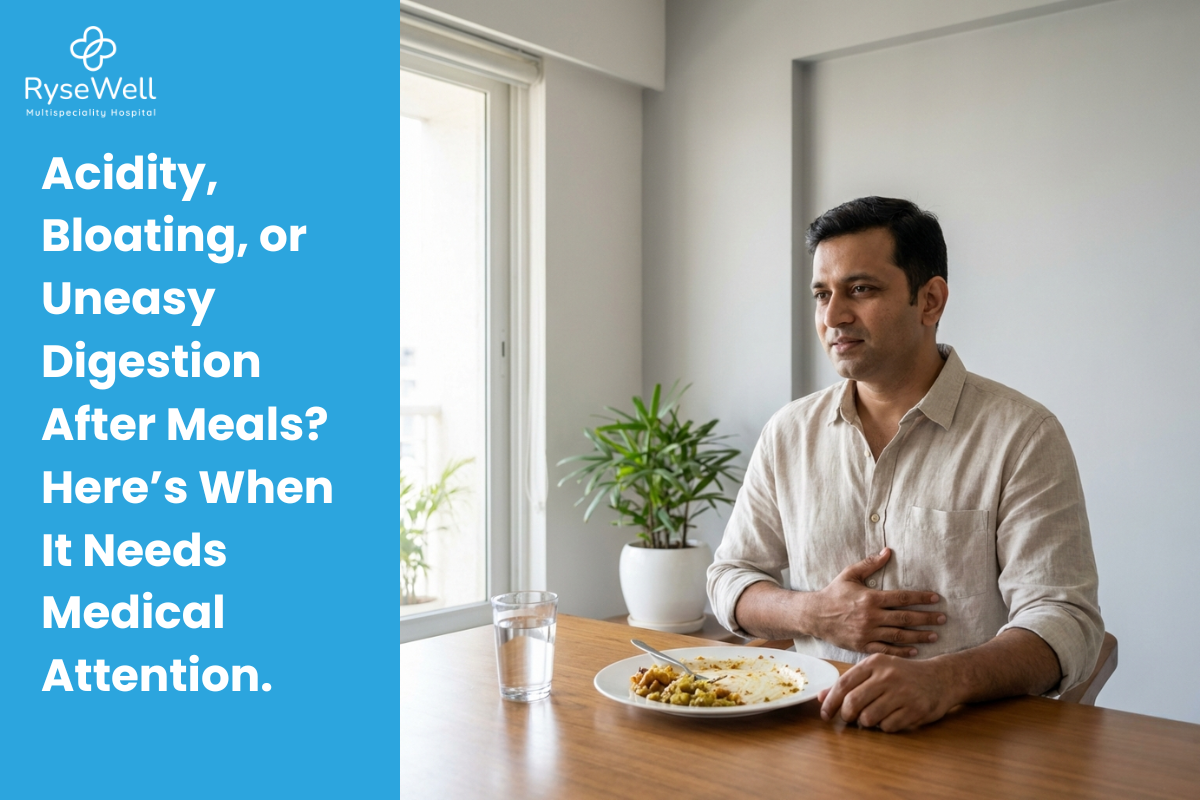
Digestive discomfort after eating is something most people experience at some point. A feeling of heaviness, acidity, bloating, or changes in bowel habits are often brushed off as temporary issues caused by food choices or irregular meals. While mild digestive symptoms can be normal occasionally, persistent or worsening problems should never be ignored.
Many digestive conditions develop silently and gradually. What begins as occasional acidity or bloating can progress into chronic conditions like gastroesophageal reflux disease (GERD), irritable bowel syndrome (IBS), or other gut-related disorders if left unaddressed.
At RyseWell Hospital, we see a growing number of patients seeking help for digestive problems that initially seemed harmless. This blog helps you understand what is normal, what is not, and when medical attention becomes essential.
Why Digestive Problems Occur After Eating
The digestive system works in coordination with food timing, quality, stress levels, and physical activity. Digestive issues after meals can arise due to several factors.
- Overeating or eating too quickly
- High intake of oily, spicy, or processed foods
- Excess caffeine or carbonated beverages
- Irregular meal timings
- Stress and anxiety affecting gut function
- Low physical activity
When digestion is repeatedly strained, the gut becomes sensitive, leading to frequent symptoms.
Common Digestive Problems After Eating
Acidity and Heartburn
Acidity occurs when excess stomach acid flows back into the food pipe, causing irritation. Common symptoms include:
- Burning sensation in the chest or upper abdomen
- Sour or bitter taste in the mouth
- Chest discomfort after meals
- Nausea or regurgitation
Occasional acidity may resolve on its own, but frequent episodes may indicate GERD or gastritis.
Bloating and Excess Gas
Bloating is the uncomfortable sensation of fullness or tightness in the abdomen. It often happens due to:
- Poor digestion of fatty foods
- Excess salt leading to water retention
- Gas production from gut bacteria
- Food intolerances
If bloating becomes painful, persistent, or frequent, it may point toward gut imbalance or functional digestive disorders.
Irritable Bowel Syndrome (IBS)
IBS is a common digestive condition that affects bowel habits and abdominal comfort. Symptoms often worsen after meals and include:
- Abdominal pain or cramping
- Diarrhea, constipation, or alternating bowel patterns
- Bloating and gas
- Feeling of incomplete bowel evacuation
IBS is strongly influenced by diet, stress, and gut sensitivity.
What Digestive Symptoms Are Usually Normal
Digestive discomfort is often considered normal if it:
- Occurs occasionally
- Resolves within a short time
- Improves with light meals and hydration
- Does not interfere with sleep or daily activities
These symptoms typically reflect temporary digestive strain rather than disease.
When Digestive Problems Need Medical Attention
You should consult a doctor if digestive symptoms:
- Occur frequently or after most meals
- Persist for more than a few days
- Gradually worsen over time
- Affect sleep, work, or daily routine
Warning Signs That Should Not Be Ignored
- Severe or persistent abdominal pain
- Unexplained weight loss
- Blood in stools
- Black or tarry stools
- Difficulty swallowing
- Persistent nausea or vomiting
- Chronic diarrhea or constipation
These symptoms may indicate underlying conditions that require prompt evaluation.
How Eating Patterns Can Trigger Chronic Digestive Conditions
Repeated stress on the digestive system can convert temporary symptoms into long-term problems.
- Irregular meals disrupt gut rhythm
- Chronic stress affects gut-brain communication
- Excess fat slows digestion
- High sugar intake alters gut bacteria
Over time, these factors contribute to acid reflux, IBS flare-ups, and chronic indigestion.
Why Self-Medicating Digestive Symptoms Can Be Risky
Many people rely on over-the-counter antacids or digestive aids for relief. While these may provide short-term comfort, prolonged self-medication can:
- Mask underlying disease
- Delay proper diagnosis
- Lead to dependency
- Allow conditions to worsen silently
Medical evaluation ensures that treatment targets the root cause, not just symptoms.
How RyseWell Hospital Evaluates Digestive Problems
At RyseWell Hospital, digestive symptoms are assessed through a structured and patient-focused approach.
Clinical Assessment
Understanding symptom patterns, food habits, lifestyle, and stress levels.
Physical Examination
Checking for tenderness, swelling, or warning signs.
Diagnostic Tests (If Required)
- Blood tests
- Stool examination
- Ultrasound abdomen
- Endoscopy or imaging when indicated
This helps identify conditions accurately and guide appropriate treatment.
Medical Management of Digestive Disorders
Treatment depends on the underlying cause and severity.
- Acid suppression therapy for GERD or gastritis
- Medications to regulate bowel movements
- Treatment for infections or inflammation
- Dietary and lifestyle counseling
- Stress management guidance
The goal is long-term digestive balance, not just temporary relief.
Lifestyle Measures That Support Digestive Health
Medical care works best when supported by healthy habits.
- Eat slowly and mindfully
- Maintain regular meal timings
- Avoid lying down immediately after meals
- Stay physically active
- Reduce caffeine and alcohol intake
- Manage stress effectively
- Ensure adequate sleep
Consistency plays a key role in digestive recovery.
Why Early Medical Care Makes a Difference
Ignoring digestive symptoms can lead to:
- Chronic acidity and reflux disease
- Worsening IBS symptoms
- Nutritional deficiencies
- Reduced quality of life
Early diagnosis and intervention help prevent complications and improve long-term gut health.
How RyseWell Hospital Supports Digestive Health
RyseWell Hospital provides comprehensive digestive care through:
- Experienced general physicians and specialists
- Accurate diagnostics
- Individualized treatment plans
- Lifestyle and dietary guidance
- Preventive and long-term follow-up care
Our focus is on helping patients understand their symptoms and regain digestive comfort safely.
FAQs: Digestive Problems After Eating
Is acidity after meals normal?
Occasional acidity can be normal, but frequent episodes need medical evaluation.
How long should bloating last after eating?
Bloating should settle within a short period. Persistent bloating should be checked.
Can IBS symptoms worsen after meals?
Yes, IBS symptoms often flare after eating, especially with trigger foods.
When should I consult a doctor for digestive issues?
If symptoms persist, worsen, or affect daily life, medical consultation is advised.
Can digestive problems become chronic if untreated?
Yes, untreated digestive issues can progress into long-term conditions.
Conclusion
Digestive problems after eating are common, but they should not be dismissed when they become frequent or disruptive. Acidity, bloating, and IBS symptoms may be early signs of underlying digestive conditions that require medical attention.
Listening to your body and seeking timely care can prevent long-term complications and restore digestive health. At RyseWell Hospital, we are committed to providing expert evaluation, accurate diagnosis, and personalized care for digestive concerns.
If you are experiencing ongoing digestive discomfort after meals, consult RyseWell Hospital for timely guidance and support toward better digestive health.
📞 Call: +91 7709862164
📍 Location: Rysewell Hospital, Pune
Recent Blogs


 Health Tests Every Man Should Consider After 30
June 22, 2026

 Why So Many Men Feel Constantly Exhausted Today ?
June 18, 2026



 Monsoon Health Risks Most Families Ignore
June 8, 2026

No related posts found in this category.