
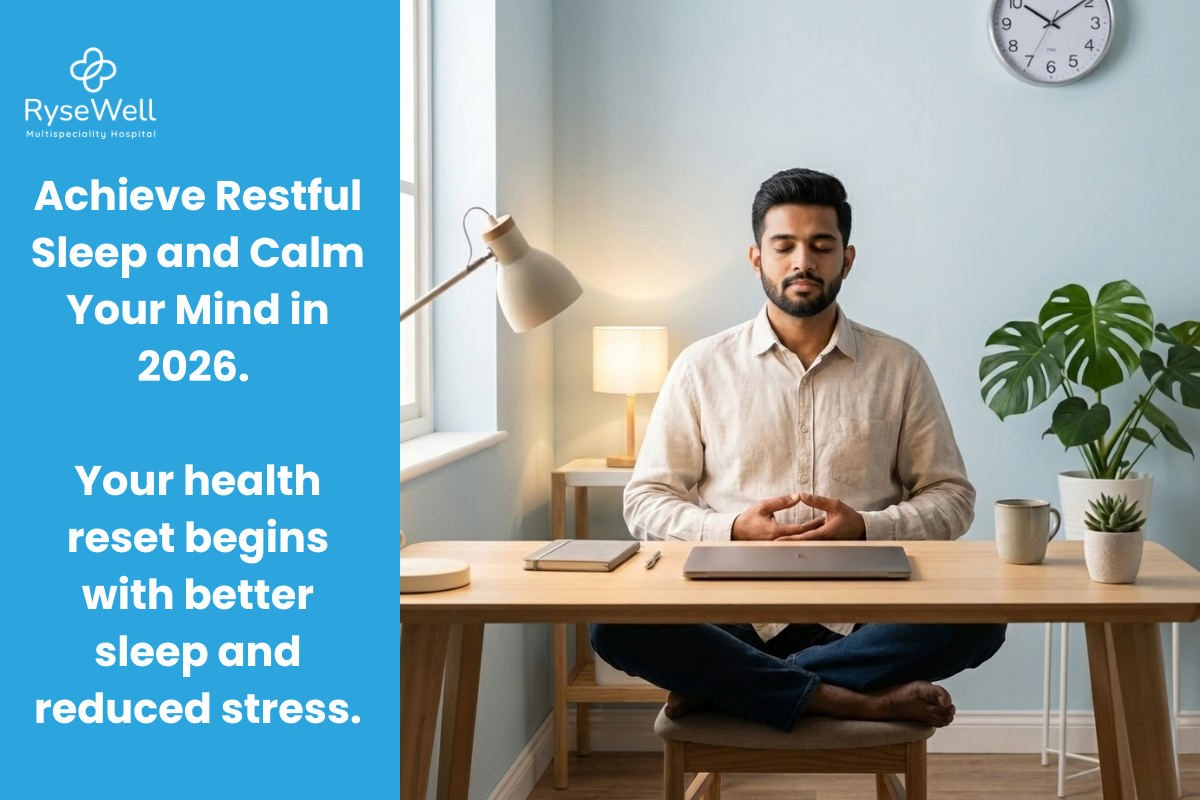
Introduction: A New Year Health Reset
As the new year begins, many of us set resolutions to improve our health, but often, the most overlooked aspects of wellness are sleep and stress management. With our busy, modern lives, poor sleep and constant stress have become common, affecting not only our mental well-being but also our physical health.
The connection between sleep quality and stress is powerful. One feeds into the other, creating a cycle that can take a toll on our energy, mood, and overall health. However, with small, consistent changes, you can reset this cycle and start the new year feeling refreshed and revitalized.
At Rysewell Hospital, we are dedicated to helping you achieve a healthier, stress-free life with our preventive care approach. In this blog, we’ll walk you through the steps to improve sleep quality, reduce stress, and embrace a healthy lifestyle in 2025.
Why Sleep and Stress Are Closely Connected
Sleep and stress share a two-way relationship. Here’s how they affect each other:
- Stress Affects Sleep: When you are stressed, your body produces higher levels of cortisol, the stress hormone. Elevated cortisol levels can make it difficult for your body to relax, preventing you from falling or staying asleep.
- Poor Sleep Increases Stress: Lack of sleep affects the brain’s ability to regulate emotions and handle stress. When you’re sleep-deprived, you’re more likely to feel overwhelmed by the stresses of daily life, creating a vicious cycle.
- Health Impact: Over time, poor sleep and high stress can lead to serious health problems such as anxiety, depression, high blood pressure, heart disease, and weakened immunity. Managing both is essential for your long-term well-being.
Signs Your Body Needs a Health Reset
If you’re struggling with sleep or stress, it’s important to recognize the signs that indicate your body needs a reset. Some common symptoms include:
- Difficulty falling or staying asleep
- Waking up feeling tired or unrefreshed
- Irritability or anxiety
- Low energy and poor focus
- Frequent headaches or body aches
These signs indicate that your body is not operating at its best and could benefit from lifestyle adjustments, medical consultations, and consistent care.
Common Causes of Poor Sleep and Daily Stress
Several factors contribute to poor sleep and high stress levels, especially in the urban Indian context. These include:
- Screen Time and Late Nights: The blue light from screens interferes with melatonin production, making it harder to fall asleep. Late-night screen time, especially before bed, is a major contributor to poor sleep.
- Work Pressure and Irregular Schedules: With demanding jobs and irregular work schedules, many people struggle to establish a consistent sleep routine. Work pressure adds to stress, further disrupting sleep patterns.
- Poor Diet and Caffeine Intake: Consuming caffeine or heavy meals late in the day can disrupt sleep. Poor dietary choices can also exacerbate stress and lead to poor sleep quality.
- Lack of Physical Activity: Physical activity reduces stress and helps you sleep better. A sedentary lifestyle contributes to weight gain and increased stress levels, which can negatively affect sleep.
- Mental Overload: Constant worry, anxiety, and unresolved emotional issues increase stress, leading to sleep disturbances.
Practical Tips to Improve Sleep Quality
Here are some effective, medically recommended strategies to improve your sleep quality:
1. Maintain a Consistent Sleep Routine
- Go to bed and wake up at the same time every day, even on weekends. This helps regulate your body’s internal clock, making it easier to fall asleep and wake up.
2. Reduce Screen Exposure
- Avoid screens (phones, computers, TV) at least 30–60 minutes before bed. The blue light emitted by screens can interfere with the production of melatonin, making it difficult to sleep.
3. Create a Relaxing Bedroom Environment
- Make your bedroom conducive to sleep. Keep it dark, quiet, and cool. Consider using blackout curtains, earplugs, or a white noise machine to block out distractions.
4. Nutrition and Hydration
- Avoid heavy meals, caffeine, and alcohol late in the evening. Focus on light meals and stay hydrated throughout the day. Avoid drinking too much fluid right before bed to reduce nighttime bathroom trips.
5. When Naps Help and When They Don’t
- Napping can be beneficial if you’re sleep-deprived, but long or late naps can interfere with your nighttime sleep. Keep naps brief (15–30 minutes) and earlier in the day.
Effective Ways to Reduce Daily Stress
Managing stress is as important as improving sleep quality. Here’s how you can reduce daily stress effectively:
1. Stress Management Techniques
- Practice mindfulness, meditation, or deep breathing exercises. These techniques help calm the mind and reduce stress hormone levels, improving both your emotional well-being and sleep quality.
2. Physical Activity
- Exercise releases endorphins, which are natural stress-relievers. Regular physical activity such as walking, yoga, or swimming helps reduce anxiety and promotes better sleep.
3. Time Management Habits
- Prioritize tasks and set realistic goals. Break large tasks into smaller, manageable steps to reduce the pressure and stress you may feel. Organize your time to include breaks and relaxation periods.
4. Set Boundaries
- Learn to say no to extra work or commitments that cause unnecessary stress. Protect your personal time to ensure you can relax and rejuvenate.
When Lifestyle Changes Are Not Enough
While lifestyle changes are important, sometimes poor sleep or chronic stress might indicate an underlying medical condition. If you continue to experience significant difficulty with sleep or stress management, it may be time to seek professional help. Conditions like insomnia, sleep apnea, anxiety, depression, and hormonal imbalances can interfere with your sleep and stress levels.
Consulting with a doctor can help identify the root causes and ensure timely intervention. Rysewell Hospital offers sleep studies, stress evaluations, and mental health assessments to get to the heart of your sleep and stress concerns.
How Rysewell Hospital Can Support Your Health Reset
At Rysewell Hospital, we are committed to helping you achieve a healthier lifestyle. Our services include:
- General Medicine Consultations for sleep and stress-related issues
- Preventive Health Checkups to monitor overall health and prevent complications
- Stress and Sleep-related Evaluations to identify underlying conditions
- Personalized Care Plans tailored to address your unique health needs
Our patient-first approach ensures that you receive compassionate and expert care, tailored to help you manage stress and improve your sleep quality.
FAQs on Improving Sleep Quality and Reducing Stress
Q1: How many hours of sleep are ideal for adults?
A1: Most adults need 7–9 hours of sleep each night for optimal health and well-being.
Q2: Can stress really affect sleep quality?
A2: Yes, chronic stress raises cortisol levels, making it difficult to fall asleep and stay asleep. Reducing stress can significantly improve sleep quality.
Q3: When should I see a doctor for sleep problems?
A3: If sleep issues persist for more than a couple of weeks, or if you experience symptoms like snoring, choking, or excessive daytime sleepiness, it’s time to consult a doctor.
Q4: Are sleep issues linked to other health problems?
A4: Yes, sleep problems can be linked to various conditions such as high blood pressure, diabetes, anxiety, and depression. It’s important to address both the root cause and the sleep disorder.
Q5: How long does it take to reset sleep patterns?
A5: Resetting sleep patterns may take 2–3 weeks, depending on consistency with sleep hygiene and lifestyle changes. Patience and persistence are key.
Conclusion: Prioritize Sleep and Stress Management in 2025
As you begin this new year, make sleep quality and stress management a priority. Small changes to your routine, such as practicing mindfulness, establishing a sleep schedule, and seeking help when needed, can improve both your mental and physical well-being.
At Rysewell Hospital, we are here to support you every step of the way, ensuring your health reset is effective, sustainable, and aligned with your goals.
Ready to Reset Your Health?
Book your consultation at Rysewell Hospital today and begin your journey toward better sleep and reduced stress.
📞 Call: +91 7709862164
📍 Location: Rysewell Hospital, Pune
Recent Blogs


 The 5 Blood Tests Every Pune Professional Over 30 Needs Every Year
February 20, 2026

 Reversing Type 2 Diabetes: Is It a Myth or Reality in 2026?
February 16, 2026





No related posts found in this category.