
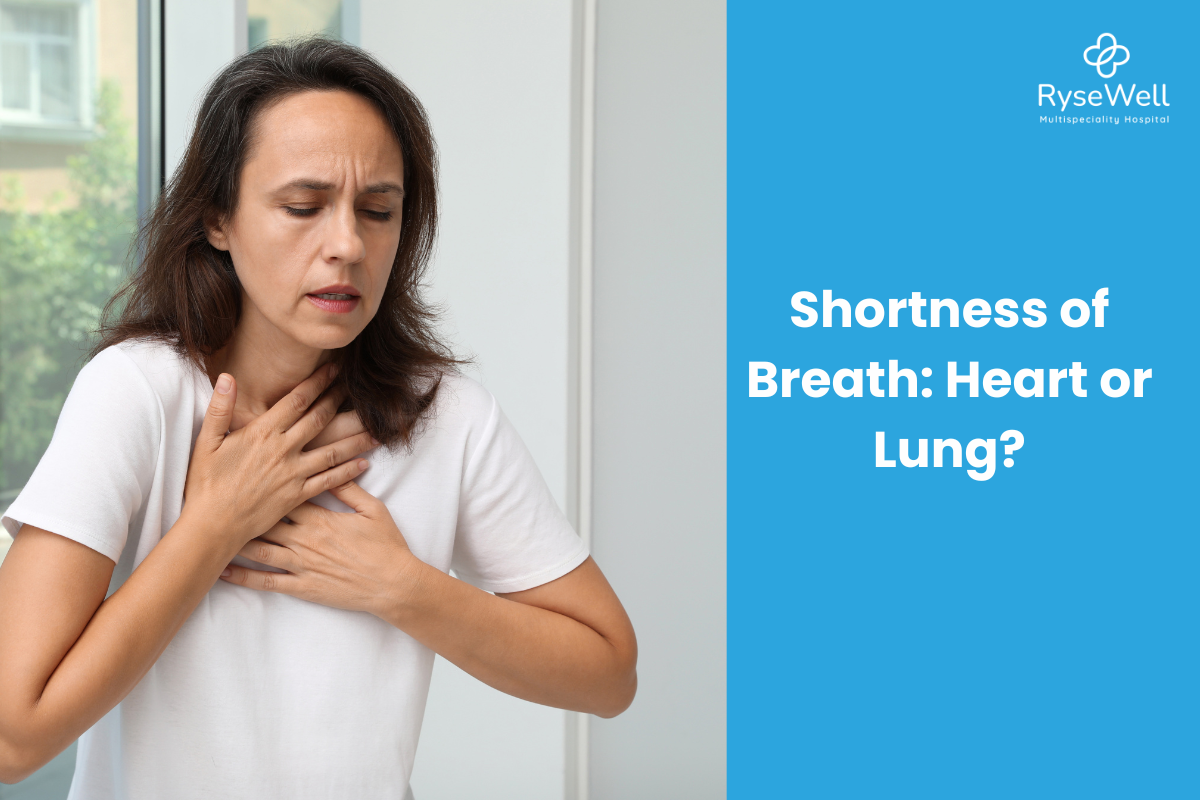
Shortness of breath is a symptom many people experience at some point in their lives. It may occur during physical activity, while climbing stairs, or sometimes even while resting. While occasional breathlessness can be normal after exertion, persistent or unexplained shortness of breath should never be ignored.
One of the most common questions patients ask is: Is my shortness of breath related to my heart or my lungs?
The truth is that breathlessness can arise from several medical conditions, but the heart and lungs are the two most common sources. Understanding the difference between heart-related and lung-related causes is essential for early diagnosis and proper treatment.
At RyseWell Multispeciality Hospital, we often evaluate patients with breathlessness to determine whether the underlying issue is cardiac, respiratory, or sometimes a combination of both.
Understanding Shortness of Breath
Shortness of breath, medically known as dyspnea, occurs when the body feels that it is not getting enough oxygen. This sensation may range from mild discomfort to severe breathing difficulty.
Breathlessness can occur:
- During physical exertion
- While lying down
- Suddenly without warning
- Gradually over weeks or months
Because both the heart and lungs play critical roles in oxygen delivery, any disruption in their function can cause breathing difficulties.
How the Heart and Lungs Work Together
To understand breathlessness, it helps to know how the heart and lungs function together.
The lungs bring oxygen into the body when we breathe in. This oxygen enters the bloodstream.
The heart then pumps oxygen-rich blood throughout the body to supply organs and tissues.
If either the lungs cannot bring in enough oxygen, or the heart cannot pump blood effectively, the body may respond with shortness of breath.
Heart-Related Causes of Shortness of Breath
When breathlessness originates from the heart, it usually means the heart is struggling to pump blood efficiently.
Some common heart-related causes include:
1. Heart Failure
Heart failure does not mean the heart has stopped working. It means the heart is not pumping blood effectively enough to meet the body’s needs.
When this happens, fluid can accumulate in the lungs, causing breathlessness.
Common symptoms include:
- Shortness of breath during activity
- Breathlessness while lying flat
- Swelling in the legs or ankles
- Fatigue
- Rapid or irregular heartbeat
2. Coronary Artery Disease
Blocked or narrowed arteries that supply blood to the heart can reduce oxygen delivery to the heart muscle.
This may cause:
- Chest discomfort
- Breathlessness during exertion
- Fatigue
In some individuals, breathlessness may be the only symptom.
3. Heart Valve Disorders
Heart valves regulate blood flow within the heart. When valves become narrowed or leaky, the heart must work harder to circulate blood.
This extra strain can lead to:
- Breathlessness
- Fatigue
- Swelling in the legs
Lung-Related Causes of Shortness of Breath
Breathlessness can also arise from conditions affecting the lungs or airways.
1. Asthma
Asthma causes inflammation and narrowing of the airways, making it difficult to breathe.
Symptoms may include:
- Wheezing
- Chest tightness
- Breathlessness
- Coughing, especially at night
2. Chronic Obstructive Pulmonary Disease (COPD)
COPD is often linked to long-term smoking or environmental exposure. It causes progressive damage to the lungs.
Common symptoms include:
- Persistent cough
- Mucus production
- Gradual worsening of breathlessness
3. Lung Infections
Conditions such as pneumonia or bronchitis can cause inflammation in the lungs.
Symptoms may include:
- Fever
- Cough
- Chest discomfort
- Shortness of breath
4. Pulmonary Embolism
A pulmonary embolism occurs when a blood clot blocks a lung artery. This condition requires immediate medical attention.
Symptoms may include:
- Sudden breathlessness
- Chest pain
- Rapid heartbeat
- Dizziness
Key Differences Between Heart and Lung Breathlessness
Although symptoms may overlap, certain patterns can provide clues.
Heart-related breathlessness often:
- Occurs when lying down
- Improves when sitting upright
- Is associated with leg swelling
- Comes with fatigue and reduced exercise tolerance
Lung-related breathlessness often:
- Is accompanied by coughing or wheezing
- Occurs with respiratory infections
- May worsen with exposure to allergens or pollutants
However, these patterns are not always clear, which is why medical evaluation is essential.
Warning Signs That Require Immediate Medical Attention
Shortness of breath can sometimes signal a medical emergency.
Seek immediate medical help if breathlessness occurs with:
- Chest pain or pressure
- Sudden dizziness or fainting
- Blue or pale lips
- Rapid heartbeat
- Severe difficulty breathing
Early intervention can be life-saving in many of these situations.
How Doctors Identify the Cause
Diagnosing the cause of breathlessness requires careful evaluation.
At RyseWell Multispeciality Hospital, the diagnostic process may include:
- Detailed medical history
- Physical examination
- Blood tests
- Chest X-ray
- ECG (electrocardiogram)
- Echocardiogram
- Pulmonary function tests
These tests help determine whether the problem originates in the heart, lungs, or another system.
Lifestyle Factors That Can Contribute to Breathlessness
Several lifestyle factors may increase the risk of breathing difficulties:
- Smoking
- Sedentary lifestyle
- Obesity
- Chronic stress
- Poor air quality exposure
Managing these factors can significantly improve respiratory and cardiovascular health.
Preventive Steps for Heart and Lung Health
Maintaining healthy habits can reduce the risk of breathlessness related to both heart and lung disease.
Maintain Regular Physical Activity
Moderate exercise strengthens both the heart and lungs.
Avoid Smoking
Smoking damages both the respiratory and cardiovascular systems.
Maintain a Healthy Weight
Excess weight can increase the strain on the heart and lungs.
Monitor Blood Pressure and Cholesterol
Routine health checkups help detect early risk factors.
Stay Updated with Vaccinations
Vaccines can help prevent respiratory infections that may lead to breathing complications.
When Should You Consult a Doctor?
You should seek medical advice if:
- Breathlessness occurs frequently
- It interferes with daily activities
- It appears suddenly without exertion
- It is associated with chest discomfort or fatigue
Early medical evaluation helps identify the cause and begin appropriate treatment before complications develop.
How RyseWell Multispeciality Hospital Can Help
At RyseWell Multispeciality Hospital, we offer comprehensive evaluation and treatment for patients experiencing shortness of breath.
Our services include:
- Cardiology consultation
- Respiratory evaluation
- Advanced diagnostic testing
- Preventive health screening
- Personalized treatment plans
Our multidisciplinary approach ensures that both cardiac and respiratory causes are carefully evaluated.
Frequently Asked Questions
Can anxiety cause shortness of breath?
Yes. Anxiety and panic attacks can cause breathlessness, but it is important to rule out medical causes first.
Is shortness of breath always related to the heart?
No. It can be caused by lung conditions, anemia, infections, or even stress.
Can dehydration cause breathlessness?
Severe dehydration can affect circulation and blood pressure, which may lead to feelings of breathlessness.
How do I know if my breathlessness is serious?
If breathlessness is sudden, severe, or accompanied by chest pain or dizziness, it requires immediate medical attention.
Can lifestyle changes improve breathlessness?
Yes. Improving fitness, quitting smoking, and managing chronic conditions can significantly reduce symptoms.
Conclusion
Shortness of breath is a symptom that should never be ignored. While it may sometimes be related to temporary factors such as exertion or stress, persistent breathlessness can indicate underlying heart or lung conditions.
Understanding the cause is the first step toward effective treatment.
If you are experiencing unexplained breathlessness, consult the medical team at RyseWell Multispeciality Hospital for a comprehensive evaluation and personalized care.
Early diagnosis and timely treatment can protect both your heart and lungs — and help you breathe easier.
Recent Blogs
 Shortness of Breath: Heart Problem or Lung Issue?
March 14, 2026




 The 5 Blood Tests Every Pune Professional Over 30 Needs Every Year
February 20, 2026

 Reversing Type 2 Diabetes: Is It a Myth or Reality in 2026?
February 16, 2026

No related posts found in this category.