(Hypothyroidism, Hyperthyroidism, Thyroid Nodules, Goiter & Thyroid Surgery Coordination)
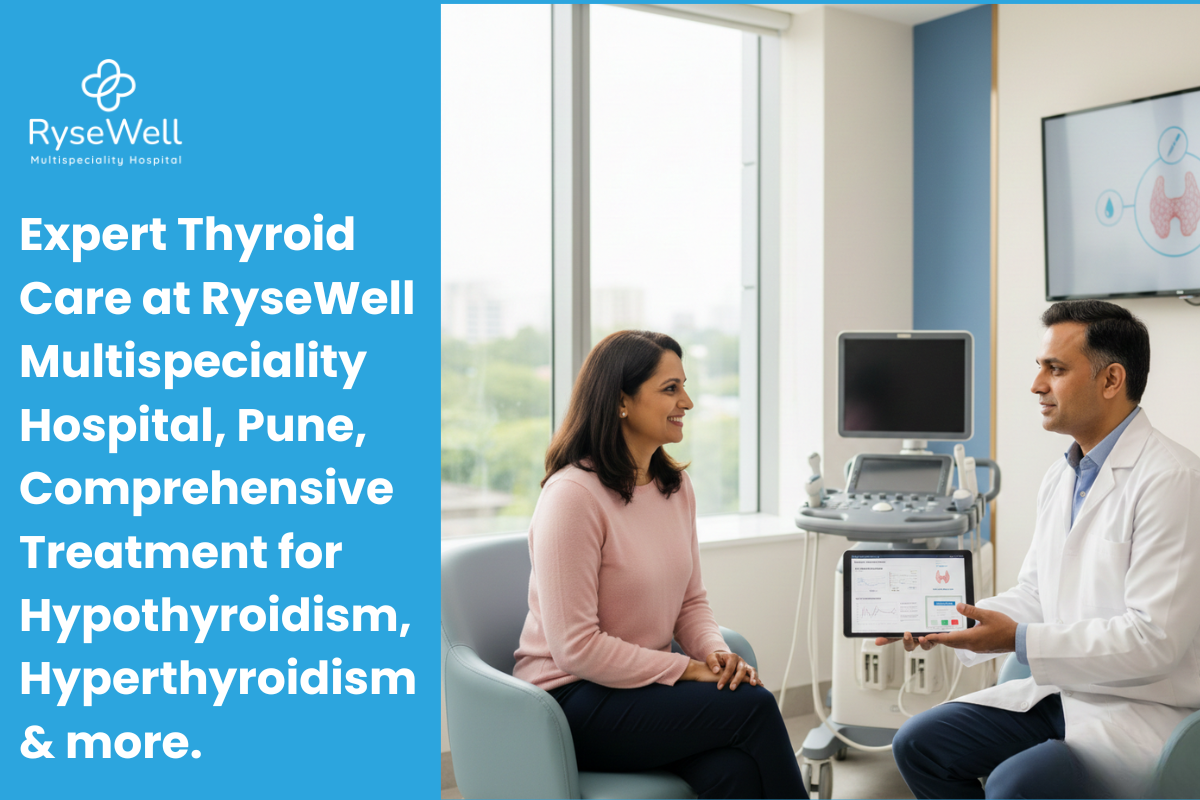
Thyroid problems are among the most common hormonal disorders today – yet many people ignore early symptoms like tiredness, weight changes, or neck swelling until they start affecting daily life. At RyseWell Multispeciality Hospital, Pune, our Endocrinology Department offers comprehensive, evidence-based thyroid care for hypothyroidism, hyperthyroidism, thyroid nodules, and goiter, with seamless coordination for thyroid surgery when required.
This blog explains how the thyroid works, common thyroid disorders, and how RyseWell’s expert endocrinologists diagnose, treat, and support you through every step of your thyroid health journey.
Understanding Your Thyroid: The Body’s “Engine Regulator”
The thyroid is a small, butterfly-shaped gland located at the front of your neck, but it has a powerful role in your health. It produces thyroid hormones, mainly T3 and T4, which regulate how fast or slow your body “runs” — influencing metabolism, energy levels, heart rate, weight, mood, temperature, skin, hair, and even menstrual cycles.
When the thyroid produces too little hormone (hypothyroidism) or too much hormone (hyperthyroidism), or develops structural changes like nodules or goiter (enlargement), multiple body systems can be affected. Early diagnosis and proper treatment prevent complications such as heart disease, infertility, osteoporosis, and in some cases, cancer.
At RyseWell, our endocrinologists specialize in accurately identifying the specific thyroid disorder to provide precise, personalized treatment rather than a one-size-fits-all approach.
Common Thyroid Disorders Treated at RyseWell
1. Hypothyroidism (Underactive Thyroid)
Hypothyroidism results when the thyroid gland produces insufficient hormones, which slows down your metabolism. Common symptoms include fatigue, weight gain, feeling cold, dry skin, hair thinning, constipation, irregular or heavy menstrual periods, and low mood or brain fog. The leading cause is autoimmune Hashimoto’s thyroiditis, though iodine deficiency, thyroid surgery, radiation, and certain medications can also cause hypothyroidism.
Treatment at RyseWell typically involves carefully dosed levothyroxine (thyroid hormone replacement), with regular blood tests to monitor hormone levels and adjust therapy as needed to maintain optimal thyroid function across life stages, including pregnancy and aging.
2. Hyperthyroidism (Overactive Thyroid)
Hyperthyroidism occurs when the thyroid produces excess hormones, accelerating body functions. Symptoms include unexplained weight loss despite good appetite, palpitations or rapid heartbeat, heat intolerance, excessive sweating, nervousness, hand tremors, sleep disturbances, and frequent bowel movements. Graves’ disease (an autoimmune disorder), toxic nodular goiter, and thyroiditis are common causes.
RyseWell endocrinologists manage hyperthyroidism with antithyroid medications, beta-blockers for symptom control, and close monitoring. In selected cases, radioactive iodine therapy or thyroid surgery may be recommended, which our team coordinates to ensure safe, effective care.
3. Thyroid Nodules
A thyroid nodule is a lump or swelling within the thyroid gland. Most nodules are benign, but a minority can be cancerous. Symptoms might include a visible or palpable lump, sensation of something stuck in the throat, voice changes, or difficulty swallowing for larger nodules.
We evaluate thyroid nodules using ultrasound imaging and perform fine-needle aspiration cytology (FNAC) when indicated to rule out malignancy. Based on results, nodules may be monitored, medically managed, or treated surgically.
4. Goiter (Enlarged Thyroid)
Goiter refers to an abnormal enlargement of the thyroid gland. It can be associated with hypothyroidism, hyperthyroidism, or normal hormone levels. Causes include iodine deficiency, autoimmune thyroid disease, or multinodular goiter.
Patients may experience visible neck swelling, pressure, tightness, swallowing difficulty, or breathing issues if large. We diagnose the cause and extent with blood tests and imaging, offering tailored treatment: medications, iodine correction, or surgery for symptomatic or cosmetically concerning goiters.
How RyseWell Diagnoses Thyroid Disorders
Accurate diagnosis is critical for effective thyroid treatment. Our process includes:
Detailed Consultation
Your endocrinologist takes a thorough medical history including symptoms, duration, family history, and associated health conditions such as diabetes or heart disease. They review medications and perform a focused physical exam of your neck and body systems to differentiate between autoimmune, nodular, medication-related, or pituitary-adrenal disorders.
Advanced Diagnostic Tests
- Blood Tests: TSH, free T4, free T3, thyroid antibodies (Anti-TPO, Anti-TG), and other pituitary/adrenal hormones if needed.
- Neck Ultrasound: To assess gland size, structure, and nodules.
- Fine-Needle Aspiration Cytology (FNAC): For suspicious nodules to exclude cancer.
- Additional Imaging: CT or MRI for large or retrosternal goiters; radioisotope scans for specific hyperthyroid/nodular cases.
Each test is interpreted alongside your symptoms and exam findings to ensure a personalized diagnosis.
Treatment Approach at RyseWell: Comprehensive, Coordinated Care
Personalized Medical Management
- Hypothyroidism: We calculate a levothyroxine dose tailored to your age, weight, heart health, or pregnancy status, with regular hormone testing and adjustments.
- Hyperthyroidism: Antithyroid medications and symptom control drugs, with monitoring for side effects. Long-term options like radioactive iodine therapy or surgery are discussed for recurrent or resistant cases.
- Nodules and Goiter: We closely monitor benign nodules or goiters; intervene with medical therapy or prompt surgical referral for suspicious or obstructive thyroid changes.
Thyroid Surgery Coordination
Surgery is considered when necessary for cancer suspicion, large goiter causing symptoms or cosmetic concerns, persistent hyperthyroidism, or nodules with malignancy risk. RyseWell endocrinologists collaborate with experienced thyroid surgeons and anesthesiologists to optimize pre-operative status and organize post-operative hormone replacement and calcium monitoring for safe recovery and long-term wellness.
Holistic Support Beyond Lab Numbers
Thyroid disorders often coexist with diabetes, obesity, menstrual irregularities, infertility, or bone health challenges. RyseWell integrates:
- Nutritional counseling focusing on balanced diets supporting metabolism and thyroid health.
- Exercise plans tailored to energy levels and heart health.
- Mental health support addressing mood, anxiety, and sleep issues.
- Continuous care with scheduled follow-ups, medication reviews, and lab tests to maintain stable health.
This holistic approach aims for improved overall well-being, not just “normal” test results.
Practical Tips to Manage Thyroid Disorders
- Take medications strictly as prescribed and avoid self-adjusting doses.
- Do not miss follow-up blood tests; thyroid status changes with age, pregnancy, weight changes, or other illnesses.
- Maintain a nutrient-rich diet, regular physical activity, good sleep hygiene, and stress management practices.
- Watch for warning signs like palpitations, breathing issues, severe fatigue, unexplained weight changes, or neck swelling—seek prompt specialist advice.
- Inform your endocrinologist if you are pregnant or planning pregnancy to adjust treatment accordingly.
When to See a Thyroid Specialist at RyseWell
You should consult our endocrinologists if you have symptoms such as fatigue, weight changes, hair loss, neck lump, palpitations, or menstrual changes; abnormal thyroid blood tests; thyroid nodules/goiter detected on ultrasound; fluctuating symptoms despite medication; or are pregnant or planning pregnancy with thyroid concerns. Early and specialized care helps prevent complications, improves quality of life, and provides clarity and confidence in your health journey.
Frequently Asked Questions (FAQs) About Thyroid Disorders
Q1: What is hypothyroidism and how is it treated?
A1: Hypothyroidism is an underactive thyroid producing insufficient hormones. It is treated with daily levothyroxine tablets and regular monitoring to keep thyroid levels normal.
Q2: What causes hyperthyroidism, and what are the treatment options?
A2: Hyperthyroidism is due to excess thyroid hormone, commonly from Graves’ disease. Treatments include antithyroid drugs, beta-blockers, radioactive iodine, or surgery in select cases.
Q3: Are thyroid nodules always cancerous?
A3: Most thyroid nodules are benign. Ultrasound and fine-needle aspiration (FNAC) help determine if cancer is present and guide treatment.
Q4: When is thyroid surgery necessary?
A4: Surgery is advised for large goiters causing symptoms, suspicious nodules, thyroid cancers, or uncontrolled hyperthyroidism.
Q5: How does pregnancy affect thyroid treatment?
A5: Thyroid hormone levels change during pregnancy. Close monitoring and dose adjustments are essential to support maternal and fetal health.
Q6: Can lifestyle changes improve thyroid health?
A6: Yes, a balanced diet, regular exercise, stress management, and medication adherence support treatment effectiveness and overall well-being.
Q7: How do I book a consultation with RyseWell’s thyroid specialists?
A7: You can call RyseWell Multispeciality Hospital at 077098 62164 or visit their website to schedule an appointment with endocrinology experts in Pune.
Thyroid disorders can disrupt your life but with expert endocrinologists, advanced diagnostics, personalized treatment plans, and coordinated surgical care, RyseWell Multispeciality Hospital in Pune is here to guide you toward stable, long-term thyroid health. Don’t wait—reach out today and take control of your hormonal health.
Recent Blogs


 The 5 Blood Tests Every Pune Professional Over 30 Needs Every Year
February 20, 2026

 Reversing Type 2 Diabetes: Is It a Myth or Reality in 2026?
February 16, 2026




No related posts found in this category.