
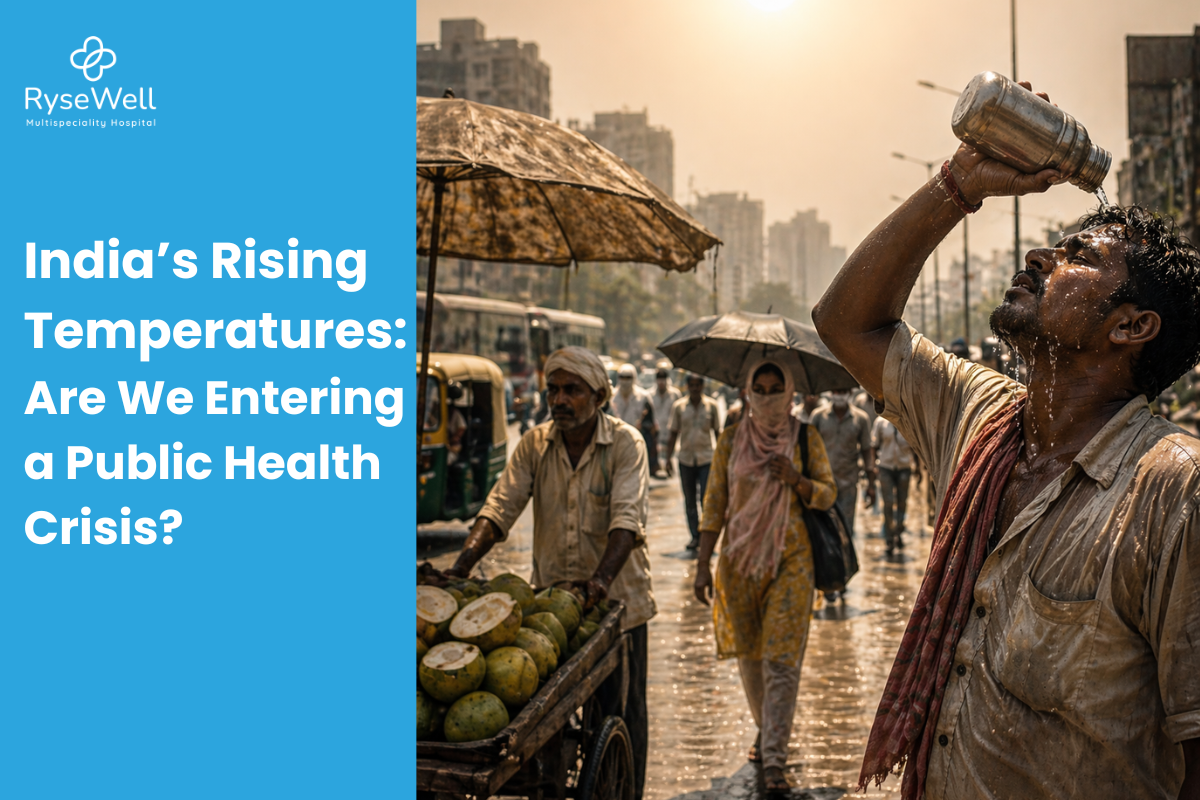
Rising Temperatures, Rising Risks: What India’s Heat Crisis Means for Your Health
What was once seasonal discomfort is now a clinically relevant health concern — visible in everyday clinical practice.
Clinical Health Blog · Rysewell Hospitals Medical Team · 10 min read
India is experiencing a measurable and sustained rise in temperatures. Repeated heatwaves, prolonged summers, and urban temperature spikes are beginning to influence disease patterns and hospital visits. This is not a distant risk — it is already visible in everyday clinical practice.
What’s Changing and Why It Matters
Several environmental shifts are converging to place continuous strain on the human body:
|
🌡️
Higher Peak Temperatures
Sustained over longer durations than recent decades.
|
🌙
Warmer Nights
Limiting physiological recovery between exposure periods.
|
|
🏙️
Urban Heat Islands
Dense construction and reduced green cover trap heat.
|
💧
Increased Humidity
Impairs the body’s ability to cool itself through sweating.
|
These factors create continuous heat exposure rather than isolated events. From a medical standpoint, this places sustained stress on multiple organ systems.
How Extreme Heat Affects the Human Body
Thermoregulation Breakdown
The human body maintains internal temperature through sweating and vascular adjustments. Under extreme heat, excessive sweating leads to dehydration, blood flow is redirected toward the skin — reducing supply to internal organs — and cooling becomes inefficient, especially in humid conditions. This can result in rising core body temperature, progressing from heat exhaustion to heatstroke.
Cardiovascular Stress
Heat exposure significantly increases cardiac workload. The heart rate rises to maintain circulation, plasma volume drops due to fluid loss, and blood pressure can fluctuate unpredictably. In susceptible individuals, this may precipitate cardiac events or worsen pre-existing heart conditions.
Renal Impact
Kidneys are particularly vulnerable during prolonged heat exposure. Dehydration reduces renal perfusion, concentrated urine increases the risk of kidney stone formation, and repeated stress may contribute to acute kidney injury. Clinically, there is a noticeable increase in renal complaints during peak summer months.
Neurological and Mental Effects
Heat affects both cognitive function and psychological well-being. Patients commonly present with fatigue, reduced concentration, and irritability. High nighttime temperatures cause headaches and sleep disturbances. Emerging data also suggests correlations between extreme heat and increased anxiety, reduced productivity, and broader behavioral changes.
Gastrointestinal and Infectious Risks
High temperatures accelerate microbial growth, driving increased incidence of foodborne illnesses and a higher risk of waterborne infections due to contamination. Digestive efficiency is also reduced in extreme heat, making the gastrointestinal tract more vulnerable overall.
High-Risk Groups
Certain populations are significantly more susceptible to heat-related complications and require heightened vigilance:
Children under 5 years
Outdoor workers
Diabetes patients
Cardiovascular disease patients
Chronic renal disorder patients
Elderly individuals have reduced thermoregulation capacity, children — especially those under five years of age — are physiologically less equipped to cope, and outdoor workers face prolonged, unavoidable exposure. Patients with chronic conditions such as diabetes, cardiovascular disease, or renal disorders face compounded risk.
Clinical Trends Observed
Healthcare providers, including institutions like Rysewell Hospitals, are reporting a clear seasonal pattern tied to rising ambient temperatures:
| Increased cases of heat exhaustion and heatstroke |
| More frequent electrolyte imbalances |
| A seasonal rise in kidney-related conditions |
| Higher incidence of skin and fungal infections |
| Exacerbation of chronic diseases during heatwaves |
These patterns indicate a growing systemic burden directly linked to environmental heat — one that is no longer confined to isolated extreme events.
Early Warning Signs
Initial symptoms are often subtle but clinically significant. Be alert to:
| ► Persistent fatigue |
| ► Excessive thirst or decreased urine output |
| ► Dizziness or lightheadedness |
| ► Muscle cramps |
| ► Headache |
Progression to confusion, vomiting, or elevated body temperature may indicate heatstroke — which requires immediate medical attention. Do not wait to seek care if these symptoms develop.
Don’t wait. Early intervention dramatically reduces the risk of complications. Speak to a Rysewell Hospitals specialist today.
Preventive Measures
Adapting to heat is often overestimated. The human body has physiological limits, and proactive prevention is far more effective than reactive treatment.
|
💧 Hydration
– Maintain consistent fluid intake throughout the day
– Use oral rehydration solutions when necessary – Limit caffeine and alcohol |
☀️ Exposure Management
– Avoid outdoors during peak hours (12 PM – 4 PM)
– Schedule activity during cooler periods |
|
🏠 Environment
– Wear lightweight, breathable clothing
– Ensure proper indoor ventilation – Avoid abrupt transitions between extreme heat and cold indoors |
🍽️ Food Safety
– Consume freshly prepared food
– Avoid heat-exposed street food – Ensure access to safe drinking water |
From a clinical and epidemiological perspective, rising temperatures are beginning to meet the criteria of a public health concern. The increase in heat-related illnesses, the aggravation of chronic diseases, and the broader impact on physical and mental health indicate a systemic issue — rather than isolated seasonal effects. Awareness, early symptom recognition, and preventive strategies are now essential at a population level.
Frequently Asked Questions
Adaptation to heat is often overestimated. The human body has physiological limits, and repeated exposure to extreme conditions can result in cumulative damage.
Awareness, early symptom recognition, and preventive strategies are essential. Timely medical intervention can significantly reduce the risk of complications.
If symptoms arise during periods of extreme heat, seeking medical guidance promptly is critical.
Rysewell Hospitals offers expert care for heat-related illnesses, kidney concerns, cardiovascular stress, and more. Our specialists are available when you need them most.
Recent Blogs


 Health Tests Every Man Should Consider After 30
June 22, 2026

 Why So Many Men Feel Constantly Exhausted Today ?
June 18, 2026



 Monsoon Health Risks Most Families Ignore
June 8, 2026

No related posts found in this category.