
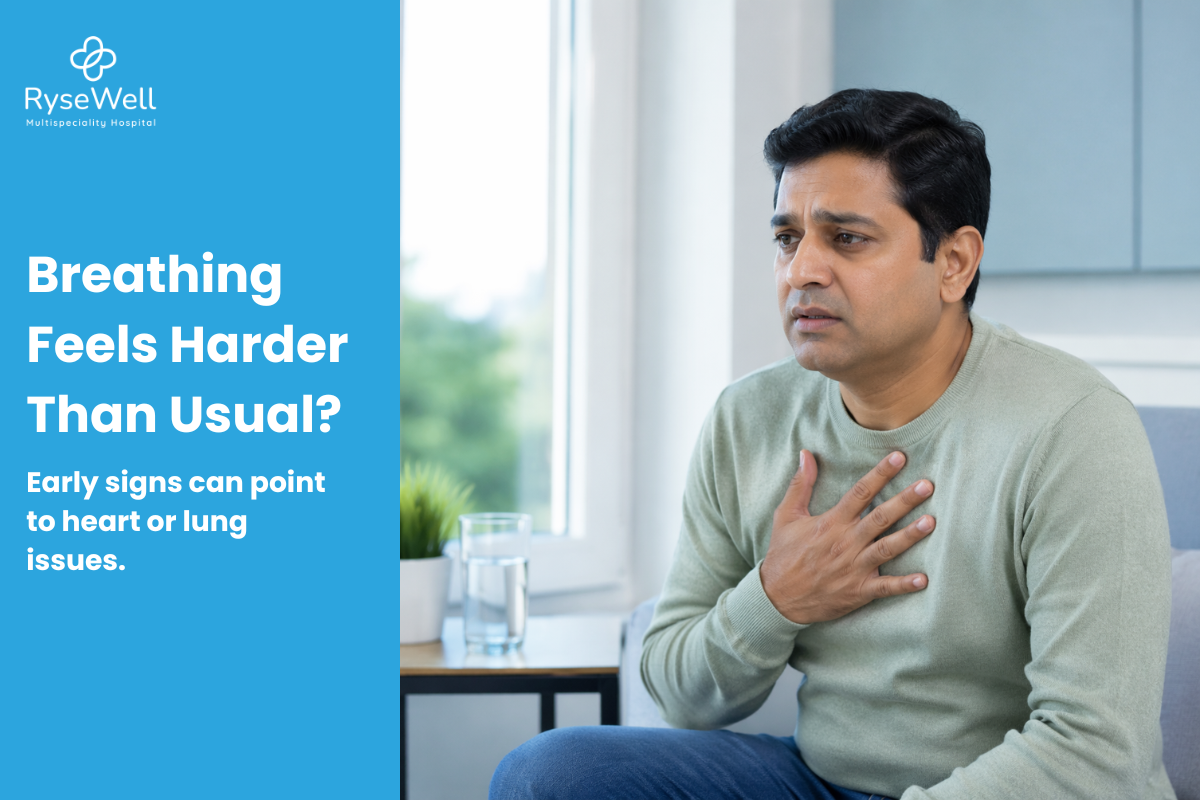
Shortness of Breath: Heart Problem or Lung Issue?
Shortness of breath is one of the most common symptoms people experience, yet it is often misunderstood or ignored. Many individuals assume it is due to tiredness, lack of fitness, or temporary stress. However, breathlessness can sometimes signal an underlying health condition related to the heart or lungs.
At RyseWell Multispeciality Hospital, we often see patients who delay seeking medical advice because they are unsure about the cause of their symptoms. Understanding whether shortness of breath is linked to a heart problem or a lung issue is essential for early diagnosis and proper treatment.
What is Shortness of Breath
Shortness of breath, also known as dyspnea, is the feeling of not being able to breathe comfortably or get enough air. It can occur suddenly or develop gradually over time.
You may notice it while walking, climbing stairs, lying down, or even at rest. While occasional breathlessness after exertion is normal, persistent or unexplained symptoms should not be ignored.
How the Heart and Lungs Work Together
The heart and lungs work closely to supply oxygen to the body.
The lungs bring oxygen into the bloodstream when you breathe in. The heart then pumps this oxygen-rich blood to the rest of the body.
If either the lungs are unable to take in enough oxygen or the heart cannot pump efficiently, the body may respond with shortness of breath.
Heart Related Causes of Breathlessness
When breathlessness is caused by the heart, it usually means that the heart is not pumping blood effectively.
- Heart failure
This occurs when the heart is unable to pump blood properly. Fluid can build up in the lungs, making breathing difficult. Patients may also notice swelling in the legs and fatigue. - Coronary artery disease
Blocked or narrowed arteries reduce blood flow to the heart. This can cause breathlessness during activity and sometimes even at rest. - Heart valve problems
If the valves in the heart do not function properly, blood flow is affected, increasing the workload on the heart and leading to breathing difficulty. - Irregular heart rhythms
Abnormal heartbeats can reduce the efficiency of blood circulation, causing symptoms like palpitations and breathlessness.
Note: Heart related breathlessness often worsens while lying down and may improve when sitting upright.
Lung Related Causes of Breathlessness
Breathlessness can also arise from conditions affecting the lungs or airways.
- Asthma
This condition causes narrowing of the airways, leading to wheezing, chest tightness, and difficulty breathing. - Chronic obstructive pulmonary disease
Often seen in smokers or those exposed to pollution, this condition causes long term damage to the lungs and progressive breathlessness. - Lung infections
Conditions such as pneumonia or bronchitis can cause inflammation in the lungs, leading to breathing difficulty along with cough and fever. - Pulmonary embolism
A blood clot in the lungs can cause sudden and severe breathlessness and requires immediate medical attention.
Note: Lung related breathlessness is often associated with coughing, wheezing, or chest congestion.
Key Differences Between Heart and Lung Causes
Although symptoms may overlap, certain patterns can help identify the cause.
- Heart related breathlessness is often linked with fatigue, swelling in the legs, and discomfort when lying flat.
- Lung related breathlessness is more likely to be associated with cough, wheezing, or mucus production.
However, it is important to note that only proper medical evaluation can confirm the exact cause.
Warning Signs You Should Not Ignore
Shortness of breath can sometimes indicate a serious condition.
Seek immediate medical attention if you experience
- Chest pain or pressure
- Sudden severe breathlessness
- Dizziness or fainting
- Rapid or irregular heartbeat
- Bluish lips or face
Early intervention can prevent complications and save lives.
How Doctors Diagnose the Cause
At RyseWell Multispeciality Hospital, identifying the cause of breathlessness involves a structured approach.
Doctors may recommend
- Clinical examination
- Blood tests
- Chest X ray
- ECG to check heart activity
- Echocardiogram to assess heart function
- Pulmonary function tests to evaluate lung capacity
These tests help determine whether the issue is related to the heart, lungs, or another underlying condition.
Lifestyle Factors That Contribute to Breathlessness
- Smoking
- Sedentary lifestyle
- Obesity
- Chronic stress
- Exposure to pollution
Managing these factors plays a key role in preventing breathlessness and improving overall health.
Preventive Steps for Better Heart and Lung Health
- Stay physically active with regular exercise
- Avoid smoking and limit exposure to pollutants
- Maintain a healthy weight
- Follow a balanced diet
- Monitor blood pressure and sugar levels
- Get regular health checkups
Small, consistent steps can make a significant difference over time.
When Should You Consult a Doctor
- Breathlessness occurs frequently
- It affects your daily activities
- It appears suddenly without exertion
- It is associated with fatigue or chest discomfort
Early consultation helps identify the cause and prevents complications.
How RyseWell Multispeciality Hospital Can Help
At RyseWell Multispeciality Hospital, we offer comprehensive care for patients experiencing shortness of breath.
- Expert consultations in cardiology and pulmonology
- Advanced diagnostic facilities
- Personalized treatment plans
- Preventive health checkups
We focus on identifying the root cause and guiding patients toward long term health.
FAQs
1. Can shortness of breath be caused by stress
Yes, stress and anxiety can lead to a feeling of breathlessness, but medical causes should always be ruled out first.
2. Is breathlessness always related to heart problems
No, it can be caused by lung conditions, anemia, infections, or other health issues.
3. How do I know if my breathlessness is serious
If it is sudden, severe, or associated with chest pain or dizziness, it requires immediate medical attention.
4. Can lifestyle changes improve breathlessness
Yes, improving fitness, quitting smoking, and managing chronic conditions can help reduce symptoms.
5. When should I get tested for breathlessness
If symptoms are frequent or unexplained, it is best to consult a doctor for proper evaluation.
Conclusion
Shortness of breath is not a symptom that should be ignored. While it may sometimes be linked to temporary factors, it can also indicate underlying heart or lung conditions that require medical attention.
Understanding the difference between heart related and lung related breathlessness is the first step toward proper care. Early diagnosis and timely treatment can help prevent complications and improve quality of life.
If you are experiencing unexplained breathlessness, consult the experts at RyseWell Multispeciality Hospital for a detailed evaluation and personalized care. Your health deserves attention before symptoms become serious.
Recent Blogs


 Health Tests Every Man Should Consider After 30
June 22, 2026

 Why So Many Men Feel Constantly Exhausted Today ?
June 18, 2026


 Monsoon Health Risks Most Families Ignore
June 8, 2026

No related posts found in this category.