
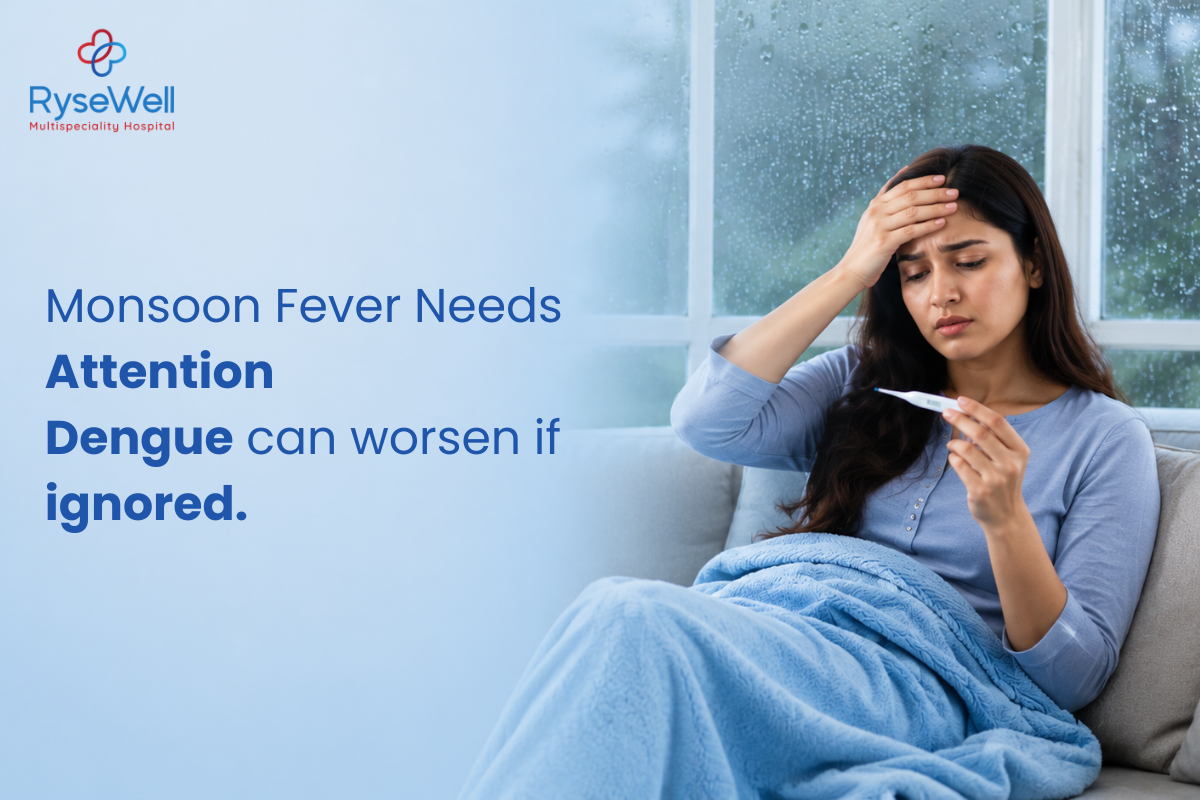
Dengue Cases Rise During Monsoon: Early Symptoms You Should Never Ignore
Monsoon brings relief from the heat — but it also brings rising dengue risk. Recognising early symptoms and seeking timely medical care can make all the difference.
Healthcare Awareness · RyseWell Hospital Healthcare Team · 7 min read
In cities like Pune, monsoon creates ideal breeding conditions for Aedes mosquitoes. Water collecting in pots, tyres, terraces, construction sites, and open containers gives these mosquitoes everything they need to multiply — and spread dengue. Dengue can begin like a regular viral fever but worsen quickly in some cases. That is why early symptom recognition and timely medical attention matter so much.
What Is Dengue?
Dengue is a viral infection spread through the bite of an infected Aedes mosquito. These mosquitoes usually bite during the daytime — especially early morning and evening. Dengue does not spread directly from person to person. It spreads when mosquitoes breed in stagnant water and bite infected individuals before transmitting the virus to others.
|
🦟
Aedes Mosquito Bite
Dengue spreads through the bite of an infected Aedes mosquito, which typically bites during early morning and evening hours.
|
💧
Stagnant Water Breeding
Mosquitoes breed in stagnant water found in pots, buckets, tyres, coolers, and open containers — common during monsoon.
|
|
🚫
Not Person-to-Person
Dengue does not spread directly between people — only through an infected mosquito acting as a carrier.
|
⏱️
4–10 Day Onset
Symptoms typically appear 4 to 10 days after a mosquito bite, often resembling a regular viral fever at first.
|
Early Dengue Symptoms You Should Watch For
Early dengue symptoms can look similar to a viral fever, which makes awareness especially important. If fever appears during monsoon and is associated with body pain or unusual weakness, dengue testing may be needed.
| Sudden high fever |
| Severe headache and pain behind the eyes |
| Body ache and joint pain |
| Nausea or vomiting |
| Skin rash |
| Extreme tiredness and loss of appetite |
Dengue Warning Signs You Should Never Ignore
Some symptoms suggest dengue may be progressing and requires urgent medical attention. These warning signs should not be treated at home.
| ► Severe abdominal pain or persistent vomiting |
| ► Bleeding from gums or nose |
| ► Blood in vomit or stools |
| ► Extreme weakness, restlessness, or breathlessness |
| ► Cold hands and feet or reduced urination |
| ► Drowsiness or confusion |
Dengue vs Viral Fever — and Why Platelet Count Matters
Dengue and viral fever can look similar in the beginning. However, dengue often causes stronger body pain, severe headache, eye pain, rash, and marked fatigue. The only reliable way to confirm dengue is through medical evaluation and blood tests.
|
🧪 Diagnostic Tests
NS1 antigen, dengue IgM/IgG, complete blood count (CBC), and platelet count monitoring help confirm dengue accurately.
|
🩸 Platelet Count
Dengue may reduce platelet count in some patients. A falling count must be monitored with symptoms and overall condition — do not panic over numbers alone.
|
|
⚠️ What Not to Do
Avoid self-medication — some painkillers can increase bleeding risk in dengue. Do not ignore fever lasting more than 2 days or delay care when warning signs appear.
|
🏥 Medical Guidance
Always follow a doctor’s guidance for platelet monitoring. Do not rely only on home remedies when warning signs are present.
|
At RyseWell Multispeciality Hospital, Pune, we encourage families to stay alert during monsoon and consult a doctor promptly if fever or weakness does not settle as expected.
Dengue Treatment: What Does Medical Care Include?
There is no specific antibiotic for dengue because it is a viral infection. Treatment focuses on supportive care and careful monitoring. Early treatment helps prevent complications.
| Fever control with safe medicines |
| Hydration support |
| Blood pressure monitoring |
| CBC and platelet count monitoring |
| Rest and medical observation |
| Hospital care if warning signs appear |
How to Prevent Dengue During Monsoon
Prevention begins by stopping mosquito breeding. Simple steps taken consistently around the home and workplace can significantly reduce the risk of dengue during monsoon season.
|
🪣 Remove Stagnant Water
Empty and clean pots, buckets, tyres, trays, and coolers regularly. Keep water containers covered at all times.
|
🦺 Personal Protection
Use mosquito repellents, wear full-sleeved clothing, and protect windows with mesh to reduce mosquito contact.
|
|
🏠 Clean Surroundings
Clean terraces and balconies regularly. Avoid water accumulation around homes and offices throughout the season.
|
🩺 Timely Consultation
If monsoon fever is accompanied by body ache, eye pain, or unusual weakness, consult a doctor promptly instead of waiting.
|
When Should You Visit RyseWell Hospital?
| ► Fever during monsoon season |
| ► Severe body ache or eye pain |
| ► Skin rash or nausea and vomiting |
| ► Unusual weakness or fatigue |
| ► Any dengue warning signs mentioned above |
Timely diagnosis and monitoring can make dengue management safer and more effective.
Key Takeaways
| Dengue spreads through Aedes mosquito bites — not person to person |
| Early symptoms include sudden fever, body ache, eye pain, rash, and fatigue |
| Warning signs like bleeding, breathlessness, or confusion require urgent care |
| Avoid self-medication — some painkillers increase bleeding risk in dengue |
| Preventing mosquito breeding is the most effective way to reduce dengue risk |
Frequently Asked Questions
The first symptoms are usually sudden high fever, headache, body pain, eye pain, weakness, nausea, and sometimes a skin rash. These may appear 4 to 10 days after an infected mosquito bite.
If fever continues for more than 1 to 2 days during monsoon, or is associated with severe body ache, eye pain, or unusual weakness, consult a doctor for dengue testing promptly.
Not always. Platelet count must be interpreted alongside symptoms, blood pressure, hydration status, and overall condition. Do not panic over platelet numbers alone — always follow a doctor’s guidance.
Mild dengue may be managed at home under medical guidance with rest, hydration, and safe fever control. However, warning signs such as bleeding, breathlessness, or confusion require urgent hospital care.
The most effective prevention is eliminating mosquito breeding sites by removing stagnant water from containers, coolers, and open areas. Using repellents, wearing full-sleeved clothing, and keeping windows meshed also help.
Dengue is one of the most important monsoon diseases in Pune, and early attention matters. Fever, body pain, headache, and weakness should not be ignored during the rainy season — especially when dengue cases are rising.
If you notice dengue symptoms or warning signs, consult a doctor promptly instead of delaying care.
For dengue evaluation, testing guidance, and treatment support — visit RyseWell Multispeciality Hospital, Pune.
RyseWell Multispeciality Hospital is committed to timely diagnosis, safe treatment, and preventive healthcare awareness — helping families stay protected every monsoon season.
Recent Blogs


 Health Tests Every Man Should Consider After 30
June 22, 2026

 Why So Many Men Feel Constantly Exhausted Today ?
June 18, 2026



 Monsoon Health Risks Most Families Ignore
June 8, 2026

No related posts found in this category.