
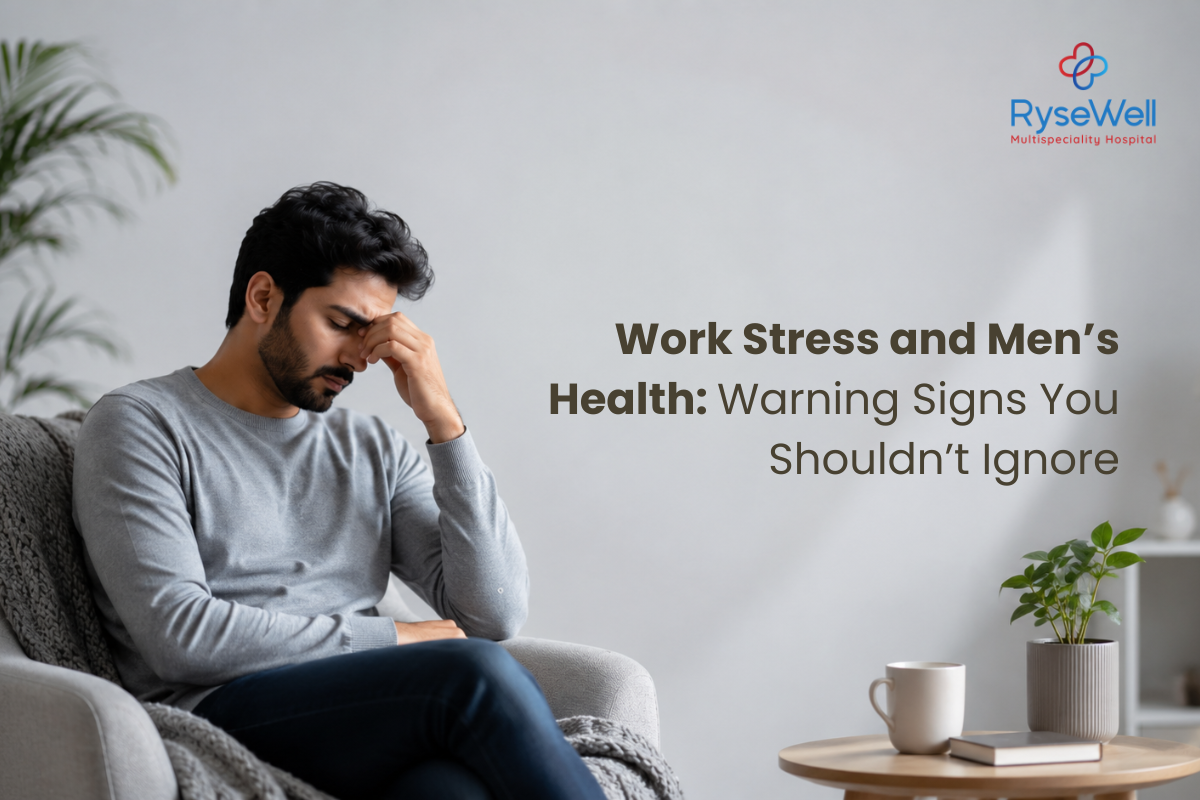
Work Stress and Men’s Health: Warning Signs You Shouldn’t Ignore
Chronic work stress can quietly affect heart health, sleep, digestion, and mood long before serious symptoms appear — and most men push through every warning sign.
Preventive Healthcare Awareness · Rysewell Hospitals Healthcare Team · 9 min read
Long working hours, constant deadlines, high-performance expectations, and the pressure to balance personal and professional responsibilities have made work-related stress a growing health crisis. Many men treat stress as a normal part of success — but chronic stress does not only affect productivity. Over time, it silently shapes heart health, sleep quality, mental well-being, and overall quality of life.
How Work Stress Affects Men’s Health
Stress triggers hormonal responses that are helpful in short-term situations. But when stress becomes constant rather than occasional, prolonged activation begins affecting multiple systems across the body simultaneously.
|
🫀
Cardiovascular Health
Prolonged stress may contribute to elevated blood pressure, increased heart strain, and higher long-term cardiovascular risk.
|
😴
Sleep Disruption
Work stress commonly causes difficulty falling asleep, frequent waking, restless nights, and mornings that feel unrefreshing.
|
|
🫃
Digestive Health
The digestive system is highly stress-sensitive — acidity, bloating, indigestion, and irregular appetite are all common stress responses.
|
🧠
Mental & Emotional Health
Chronic stress affects mood, patience, and emotional resilience — often surfacing as irritability and withdrawal before physical symptoms appear.
|
Warning Signs Men Often Dismiss as Normal
Many stress-related symptoms are normalized as simply “part of a demanding career.” Recognising these early warning signs is the first step toward protecting long-term health.
| Persistent fatigue and low energy that does not improve after rest |
| Recurring stress headaches linked to screen exposure and mental tension |
| Increased irritability, mood swings, and reduced patience in daily life |
| Digestive issues such as acidity, bloating, and stomach discomfort |
| Weight gain, reduced fitness, and declining physical stamina |
Why Men Tend to Ignore Stress Symptoms
Many men are conditioned to view stress as something that should simply be managed independently — a sign of strength rather than a health concern. This mindset can delay recognition and intervention until symptoms become much harder to address.
| ► Delaying medical advice and dismissing early symptoms |
| ► Continuing to work through exhaustion without recovery time |
| ► Prioritising professional responsibilities entirely over personal health |
| ► Spending 8 to 12 hours working daily with minimal physical activity or breaks |
| ► Remaining digitally connected with limited time for genuine mental recovery |
A preventive health assessment at Rysewell Hospitals can help identify early stress-related risk factors — before they develop into more serious health concerns.
Healthy Habits That Help Manage Work Stress
Consistent daily habits are among the most effective tools for reducing the cumulative health impact of chronic workplace stress. Small, sustainable changes deliver meaningful long-term results.
|
😴 Quality Sleep
Consistent sleep schedules support mental recovery, physical restoration, and better concentration — breaking the stress-sleep deprivation cycle.
|
🏃 Physical Activity
Regular exercise reduces stress hormones, improves mood, supports heart health, and restores energy levels depleted by chronic work pressure.
|
|
🥗 Healthy Nutrition
Balanced meals support energy production, cognitive performance, and digestive health — reducing the physical toll of ongoing stress on the body.
|
⏸️ Work Boundaries
Setting clear limits between work and personal life, and taking regular breaks throughout the day, are essential for preventing long-term burnout.
|
How Rysewell Hospitals Can Help
At Rysewell Hospitals, the focus is on preventive healthcare, lifestyle wellness, and early identification of health concerns linked to chronic stress and modern work habits — including blood pressure monitoring, cardiovascular risk assessment, stress-related symptom evaluation, and comprehensive multispecialty support.
Key Takeaways
| Work stress is becoming a significant and growing health concern among men |
| Chronic stress can affect sleep, heart health, digestion, mood, and energy levels |
| Many warning signs are routinely dismissed or accepted as normal parts of a busy career |
| Early recognition and preventive healthcare evaluation are essential for long-term health |
| Healthy lifestyle habits and regular medical assessments support sustained well-being |
Frequently Asked Questions
Prolonged stress can contribute to elevated blood pressure, increased strain on the heart, and poor lifestyle habits such as reduced physical activity and unhealthy eating — all of which raise long-term cardiovascular risk. Combined with inadequate sleep, these effects can accumulate significantly over time.
Work stress keeps the mind in an activated state, making it harder to fall asleep and stay asleep. Poor sleep in turn increases stress levels — creating a difficult cycle where each issue worsens the other. Breaking this cycle often requires addressing both sleep habits and stress management simultaneously.
Yes. The digestive system is highly sensitive to stress. Chronic workplace pressure commonly triggers acidity, bloating, indigestion, stomach discomfort, and irregular appetite. Many individuals do not connect these symptoms to stress, which delays appropriate care and management.
When stress-related symptoms — such as persistent fatigue, sleep disturbances, recurring headaches, mood changes, or digestive issues — become frequent or do not resolve with rest, it is advisable to seek a preventive health evaluation. Early identification of risk factors leads to better long-term outcomes.
Rysewell Hospitals provides preventive health assessments to identify blood pressure changes and lifestyle-related risk factors, lifestyle and wellness guidance covering stress management and healthy habits, and comprehensive multispecialty medical support for individuals experiencing physical health concerns linked to chronic work stress.
While professional success is important, health should never become the price paid for it. Chronic work stress can quietly affect physical and mental well-being long before serious symptoms become apparent. Recognising warning signs such as fatigue, sleep disturbances, headaches, mood changes, and digestive discomfort can help individuals take proactive steps toward better health.
At Rysewell Hospitals, preventive healthcare and early intervention are central to maintaining long-term wellness in today’s demanding work environment.
Taking stress seriously today can help protect your health for years to come.
Rysewell Hospitals offers preventive health assessments, lifestyle wellness guidance, and multispecialty care for men managing chronic work stress and its physical effects.
Recent Blogs


 Health Tests Every Man Should Consider After 30
June 22, 2026
 Why So Many Men Feel Constantly Exhausted Today ?
June 18, 2026



 Monsoon Health Risks Most Families Ignore
June 8, 2026

No related posts found in this category.