
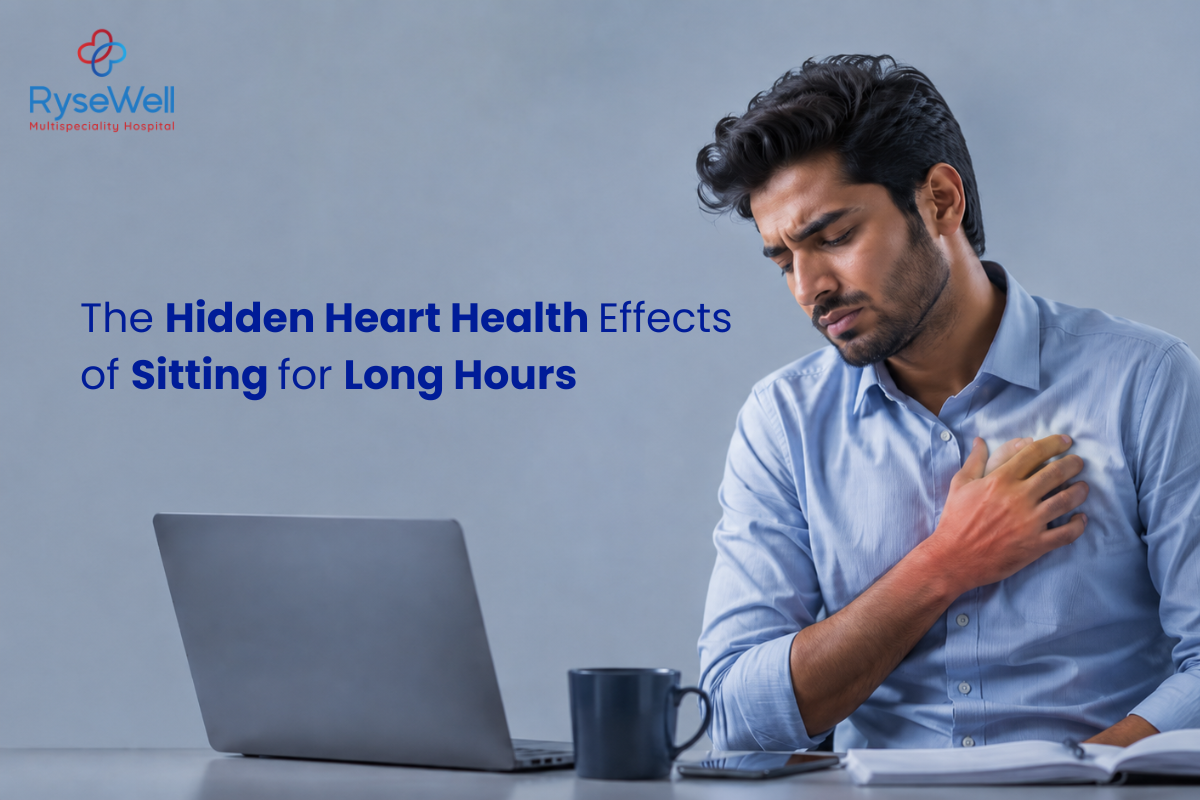
How Sitting for Long Hours Silently Affects Your Heart Health
Fatigue, low energy, weight gain, and breathlessness may be signs your sedentary lifestyle is quietly taking a toll on your cardiovascular health.
Preventive Healthcare Awareness · Rysewell Hospitals Healthcare Team · 9 min read
Modern lifestyles have changed dramatically over the last decade. Long office hours, work-from-home routines, increased screen time, and reduced physical movement have made sitting for extended periods a normal part of daily life — but the hidden health impact of prolonged sitting is becoming one of the biggest modern lifestyle concerns.
Why Sitting for Long Hours Is a Health Concern
The human body is designed for movement. When physical activity decreases for prolonged periods, several body functions begin slowing down. Extended sitting may affect key systems across the body.
|
🫀
Heart Function
Prolonged sitting slows circulation and increases cardiovascular strain over time.
|
⚖️
Metabolism
Reduced activity lowers calorie expenditure and can lead to metabolic imbalance.
|
|
🩸
Blood Circulation
Sitting for long hours can slow blood flow, especially in the lower body.
|
🍬
Blood Sugar
Inactivity can impair blood sugar regulation and affect insulin sensitivity.
|
Early Signs People Commonly Ignore
Many individuals normalize symptoms that may indicate the body is struggling with reduced physical activity and lifestyle imbalance. These signs often appear gradual but should not be overlooked.
| Constant fatigue and low energy levels |
| Body stiffness and poor posture |
| Mild breathlessness during activity |
| Gradual weight gain |
| Swelling in legs and muscle stiffness |
The Modern Lifestyle Problem
Today’s urban work culture often involves continuous desk work, long meetings, screen dependency, and minimal walking. These habits, combined with additional lifestyle factors, are significantly impacting cardiovascular wellness.
| ► Poor sleep and mental exhaustion |
| ► High stress and irregular exercise habits |
| ► Fast food consumption and poor diet |
| ► 8 to 12 hours of sitting at work daily |
| ► Minimal time spent in physical activity |
Regular preventive health assessments can help identify cardiovascular risk factors early and support better long-term heart health management.
Healthy Habits That Support Heart Health
|
🚶 Movement Breaks
Standing, stretching, or walking for a few minutes every hour can improve circulation and reduce cardiovascular strain.
|
🏃 Regular Exercise
Consistent physical activity supports heart function, blood circulation, weight management, and energy levels.
|
|
💧 Hydration
Proper hydration supports circulation and overall body function throughout the day.
|
😴 Sleep & Stress
Mental stress and poor sleep can significantly impact heart health and should not be overlooked.
|
How Rysewell Hospitals Can Help
At Rysewell Hospitals, the focus is on preventive healthcare awareness, lifestyle-related health support, early medical evaluation, and coordinated multispecialty care for individuals managing cardiovascular and sedentary lifestyle concerns.
Frequently Asked Questions
Prolonged sitting can slow blood circulation, reduce metabolic activity, contribute to weight gain, and increase stress on the cardiovascular system. Over time, these effects can raise the risk of lifestyle-related heart conditions.
Yes. Heart-related lifestyle concerns are no longer limited to older adults. Increasingly, younger professionals are experiencing elevated stress levels, poor cardiovascular fitness, and sedentary lifestyle complications due to modern work culture.
Constant fatigue, body stiffness, mild breathlessness, gradual weight gain, poor posture, and low energy levels are symptoms that should not be normalized. These may indicate that the body is being affected by prolonged inactivity.
Yes. Standing, stretching, or walking for just a few minutes every hour can meaningfully improve blood circulation, reduce muscle stiffness, and help lower the cardiovascular strain caused by continuous sitting.
Many cardiovascular risks develop silently over time. Regular health monitoring can help identify blood pressure changes, cholesterol imbalance, and other lifestyle-related risk factors early — before they lead to more serious complications.
Modern lifestyles have made prolonged sitting a routine part of everyday life, but the long-term impact on heart health should not be underestimated. Reduced movement, stress, poor sleep, and sedentary work habits are increasingly affecting cardiovascular wellness across all age groups.
Awareness, preventive healthcare, and healthier daily habits can play a major role in reducing these risks.
Taking action today — even small steps like moving more and scheduling regular check-ups — can protect your heart health for years to come.
Rysewell Hospitals provides preventive health assessments, lifestyle wellness guidance, and early medical evaluation for long-term cardiovascular wellness.
Recent Blogs


 Health Tests Every Man Should Consider After 30
June 22, 2026
 Why So Many Men Feel Constantly Exhausted Today ?
June 18, 2026



 Monsoon Health Risks Most Families Ignore
June 8, 2026
No related posts found in this category.