Introduction: The Growing Issue of Workplace Injuries in Pune
In today’s fast-paced world, desk jobs are becoming increasingly common. While technology and remote work have transformed the way we work, the sedentary nature of these jobs is contributing to a rise in workplace injuries, particularly among desk job workers. From back pain to neck strain, these injuries often go unnoticed until they interfere with daily tasks and quality of life.
In Pune, where IT professionals, call center employees, and office workers make up a large portion of the workforce, the incidence of musculoskeletal disorders and repetitive strain injuries (RSI) is growing. At RyseWell Multispeciality Hospital, we understand the importance of early intervention and prevention. This blog aims to provide you with simple, actionable steps to prevent common workplace injuries and maintain your physical well-being.
Common Workplace Injuries Desk Job Workers Face
While every job comes with its own set of risks, desk job workers in Pune are most commonly affected by:
- Back Pain
Long hours of sitting can place excess pressure on the spine and lower back, leading to chronic pain and poor posture. - Neck Strain
Constantly looking down at your desk or laptop can cause neck stiffness and headaches, affecting your mobility and overall comfort. - Carpal Tunnel Syndrome
Repetitive hand movements, like typing or using a mouse, can cause swelling and pressure on the nerves in the wrist, leading to numbness, tingling, and pain. - Shoulder Tension
Sitting in a fixed position for hours can cause tightness and muscle strain in the shoulders, especially when the arms are elevated to use a keyboard or mouse. - Eye Strain
Extended exposure to computer screens without proper breaks can cause eye fatigue, dryness, and headaches.
Steps to Prevent Common Workplace Injuries
1. Practice Good Ergonomics
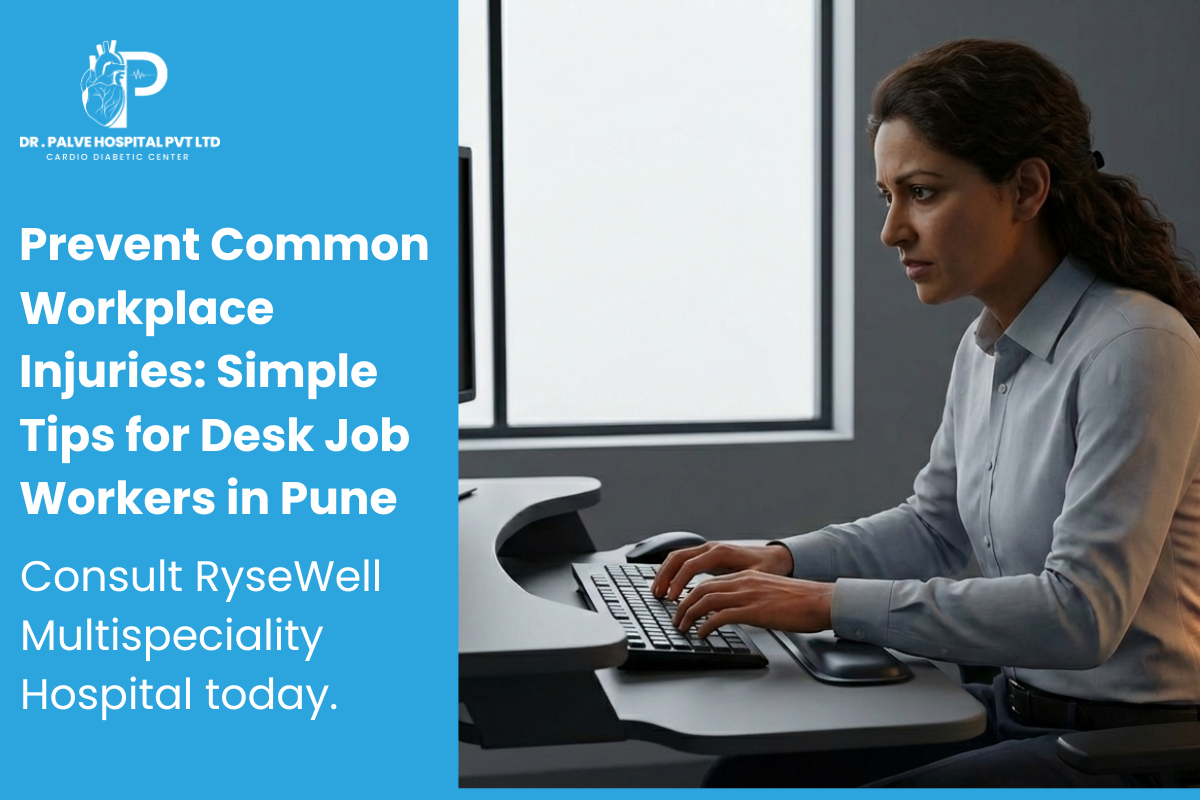
Ergonomics refers to the way your workspace is designed to support your body. Proper ergonomics can prevent many workplace injuries. Here’s how to set up your desk to reduce strain:
- Chair: Your chair should support your lower back, keep your feet flat on the ground, and ensure that your knees are at a 90-degree angle.
- Monitor: The top of your screen should be at eye level to avoid straining your neck. Keep the screen about 20-30 inches away from your eyes to reduce eye strain.
- Keyboard and Mouse: Place the keyboard and mouse at a height where your elbows are at a 90-degree angle, allowing for comfortable typing and clicking without straining the wrists.
2. Take Frequent Breaks
Sitting for long hours can lead to stiffness and strain. To prevent this:
- Stand Up Every 30 Minutes: Even if it’s just for a short stretch or walk around, taking regular breaks helps improve circulation and reduce muscle stiffness.
- Stretch: Incorporate simple stretches into your daily routine, especially for your back, shoulders, and wrists. These stretches can ease muscle tension and prevent injury.
3. Maintain Proper Posture
Good posture is essential to avoid back pain and neck strain. Follow these tips to improve posture:
- Sit Up Straight: Keep your back against the chair with shoulders relaxed and elbows close to your body.
- Keep Your Head Aligned: Avoid looking down at your screen. Your neck should stay neutral, and your head should align with your spine.
- Feet on the Ground: Ensure that your feet rest flat on the floor and avoid crossing your legs, which can strain your lower back.
4. Stay Active and Strengthen Muscles
Strengthening your core muscles, back, and legs will help support proper posture and reduce the risk of injury.
- Exercise Regularly: Engage in activities like walking, swimming, or yoga to keep your muscles strong and flexible.
- Strength Training: Focus on exercises that strengthen the muscles around your core, spine, and shoulders.
5. Use Proper Lighting and Screen Settings
Improper lighting and screen settings can contribute to eye strain and headaches. Here’s how to adjust:
- Lighting: Ensure that your workspace is well-lit to avoid glare on your screen. Use natural light when possible and avoid harsh overhead lights.
- Adjust Screen Brightness: Reduce the brightness of your screen to match the lighting around you. Consider using blue light filters to minimize eye strain.
Why Early Intervention is Important for Workplace Injuries
Even with the best ergonomic practices, injuries may still occur. Early diagnosis and treatment of these conditions can prevent further damage and help you recover faster. If you experience persistent pain, discomfort, or stiffness, it’s important to consult a specialist. At RyseWell Multispeciality Hospital, our orthopedic team is dedicated to helping you manage and prevent workplace injuries, offering treatments such as physiotherapy, muscle strengthening, and pain management.
When to Seek Medical Help
If you experience any of the following symptoms for more than a few days, it’s time to consult with an orthopedic expert:
- Persistent back or neck pain
- Swelling in the wrist or joint
- Numbness or tingling in the fingers or hands
- Difficulty moving your shoulder or arm
- Ongoing eye discomfort or headaches
At RyseWell, we provide comprehensive diagnostic tests, personalized treatment plans, and physical therapy to help you recover quickly and return to work without long-term discomfort.
Take Control of Your Health Today
Preventing workplace injuries is all about making small changes to your daily routine. By practicing good ergonomics, staying active, and listening to your body, you can avoid discomfort and stay productive at work.
At RyseWell Multispeciality Hospital, we’re here to help with a range of orthopedic services designed to prevent and treat common workplace injuries. Book your consultation with our orthopedic experts in Pune today and start your journey toward a pain-free workday.
Ready to Improve Your Health at Work?
Book your consultation at RyseWell Multispeciality Hospital and get personalized care to prevent and treat workplace injuries.
Call us now at +91 7709862164 or visit our website to schedule your appointment today.
FAQs on Preventing Workplace Injuries
Q1: What are the most common workplace injuries for desk job workers in Pune?
A1: The most common injuries are back pain, neck strain, carpal tunnel syndrome, shoulder tension, and eye strain.
Q2: How often should I take breaks if I work at a desk all day?
A2: It’s recommended to stand up and stretch every 30 minutes to improve circulation and reduce muscle stiffness.
Q3: Can ergonomics really prevent back pain?
A3: Yes, setting up your desk with proper ergonomics can significantly reduce the risk of back pain and neck strain by supporting good posture.
Q4: How long does it take to recover from a workplace injury?
A4: Recovery time depends on the severity of the injury. Most workplace injuries show improvement with physiotherapy in 4-6 weeks.
Q5: Should I see a doctor if I have minor pain from sitting at my desk?
A5: If the pain persists for more than a few days or affects your ability to work, it’s advisable to seek professional help.
Recent Blogs


 Health Tests Every Man Should Consider After 30
June 22, 2026

 Why So Many Men Feel Constantly Exhausted Today ?
June 18, 2026



 Monsoon Health Risks Most Families Ignore
June 8, 2026

No related posts found in this category.