
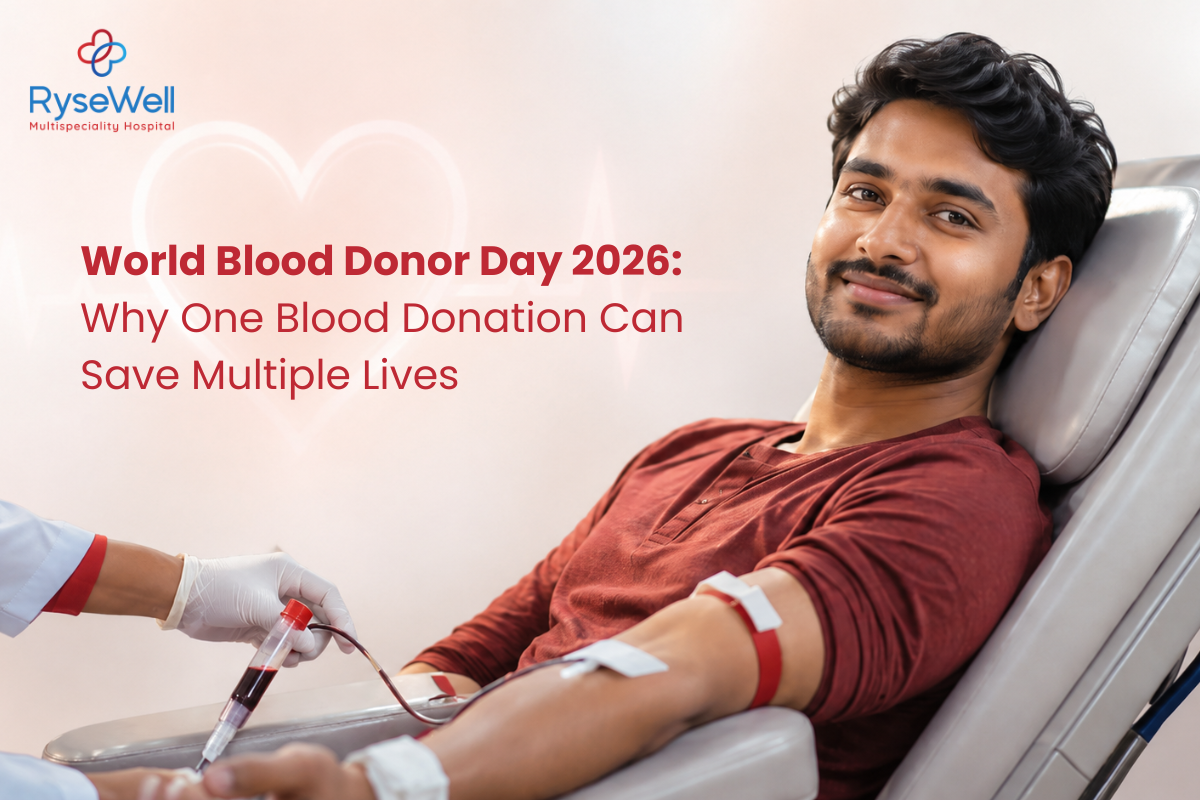
World Blood Donor Day 2026: Why One Blood Donation Can Save Multiple Lives
Blood cannot be artificially manufactured. Every voluntary donation represents hope for patients facing emergencies, surgeries, and critical treatments — often helping more than one person at a time.
Healthcare Awareness · Rysewell Hospitals Healthcare Team · 8 min read
World Blood Donor Day is observed every year to recognise the life-saving contribution of voluntary blood donors and to raise awareness about the critical role safe blood plays in emergency healthcare. A single donation can support multiple patients — because blood is separated into components, each of which helps different medical conditions. One decision to donate can become someone’s second chance at life.
How One Blood Donation Can Help Multiple Patients
Most people assume donated blood is used for a single patient. In reality, blood is separated into different components — each supporting a different medical need — meaning one donation can reach multiple individuals in need.
|
🩸
Red Blood Cells
Used for trauma patients, severe anaemia, surgery-related blood loss, and individuals with blood disorders.
|
🔬
Platelets
Critical for cancer patients undergoing chemotherapy and individuals with dengue or other conditions causing platelet drop.
|
|
💉
Plasma
Supports burn patients, clotting disorders, and critically ill individuals requiring fluid replacement and immune support.
|
🏥
Emergency Care
Road accidents, childbirth complications, and major surgeries all depend on timely blood availability to save lives.
|
Common Myths That Stop People From Donating
Despite growing awareness, many eligible donors hesitate because of widespread misconceptions around blood donation. These myths directly contribute to ongoing blood shortages in healthcare systems.
| Myth: Blood donation causes lasting weakness or fatigue |
| Myth: Only certain people are responsible for donating blood |
| Myth: Blood donation is an unsafe or painful procedure |
| Myth: Blood is only needed occasionally or during specific events |
| Myth: Someone else will always donate when it is needed |
Why Blood Shortages Remain a Serious Challenge
Even with growing public awareness, consistent blood availability remains a challenge for healthcare systems. Medical emergencies do not follow a schedule — and hospitals require a reliable, continuous supply to respond effectively.
| ► Limited number of regular, committed voluntary donors |
| ► Seasonal illness outbreaks reducing donor eligibility |
| ► Sudden spikes in emergency medical demand |
| ► Persistent myths and fear preventing eligible donors from stepping forward |
| ► Lack of awareness about the ongoing daily demand for donated blood |
Rysewell Hospitals supports healthcare awareness, emergency care preparedness, and community health initiatives. Learn more about how you can contribute this World Blood Donor Day.
Who Can Usually Donate Blood?
Eligibility for blood donation depends on individual health status and medical guidelines. A brief medical screening is always conducted before donation to ensure the safety of both the donor and recipient.
|
✅ General Eligibility
Healthy adults meeting age and weight requirements, without active infections or certain medical conditions, are generally eligible to donate.
|
🩺 Medical Screening
Health screening, blood group testing, and infection screening are conducted before donation to ensure the process is safe for everyone.
|
|
🧑🤝🧑 Young Donors
Young adults play a vital role in building a stable donor community and reducing critical shortages in emergency healthcare systems.
|
🔄 Regular Donation
Consistent voluntary donation helps hospitals maintain reliable blood availability for daily emergencies — not just during drives or campaigns.
|
How Rysewell Hospitals Supports Healthcare Awareness
At Rysewell Hospitals, the focus remains on emergency and critical care support, public health education, preventive healthcare participation, and community-centered awareness initiatives that strengthen healthcare systems and emergency preparedness for everyone.
Key Takeaways
| Blood donation plays a critical role in emergency healthcare every single day |
| One donation can help multiple patients through blood component separation |
| Safe blood supply depends entirely on voluntary donors — it cannot be manufactured |
| Myths and misconceptions continue to prevent many eligible donors from contributing |
| Public awareness and regular voluntary participation are essential for long-term healthcare preparedness |
Frequently Asked Questions
Donated blood is typically separated into its components — red blood cells, platelets, and plasma. Each component addresses a different medical need and can be used for different patients, meaning a single donation has the potential to support multiple individuals simultaneously.
Yes. Blood donation is conducted under medically supervised conditions using sterile, single-use equipment. Health screening, blood group testing, and infection screening are carried out before every donation to ensure the safety of both the donor and the patient receiving the blood.
Most healthy adults recover quickly after donating blood when they stay well hydrated and maintain proper nutrition before and after donation. Any mild fatigue experienced is temporary, and the body replenishes the donated blood naturally within a short period.
Medical emergencies happen every day, not just during blood donation drives. Hospitals require a consistent and reliable blood supply at all times. Regular voluntary donations help prevent shortages and ensure that patients in critical need always have access to the blood components they require.
Donated blood benefits a wide range of patients including accident and trauma victims, individuals undergoing major surgeries, mothers experiencing childbirth complications, cancer patients receiving chemotherapy, children with chronic blood disorders, and critically ill patients in emergency care.
World Blood Donor Day 2026 is not only about celebrating donors — it is about understanding the life-saving importance of blood donation in healthcare systems worldwide. Every donation represents hope for patients facing medical emergencies and critical treatments.
A small contribution from one healthy donor can support multiple lives and strengthen emergency healthcare readiness for the entire community.
One decision to donate blood can become someone’s second chance at life.
Rysewell Hospitals is committed to preventive healthcare awareness, emergency care support, and building healthier communities — one initiative at a time.
Recent Blogs


 Health Tests Every Man Should Consider After 30
June 22, 2026

 Why So Many Men Feel Constantly Exhausted Today ?
June 18, 2026

 Monsoon Health Risks Most Families Ignore
June 8, 2026

No related posts found in this category.