
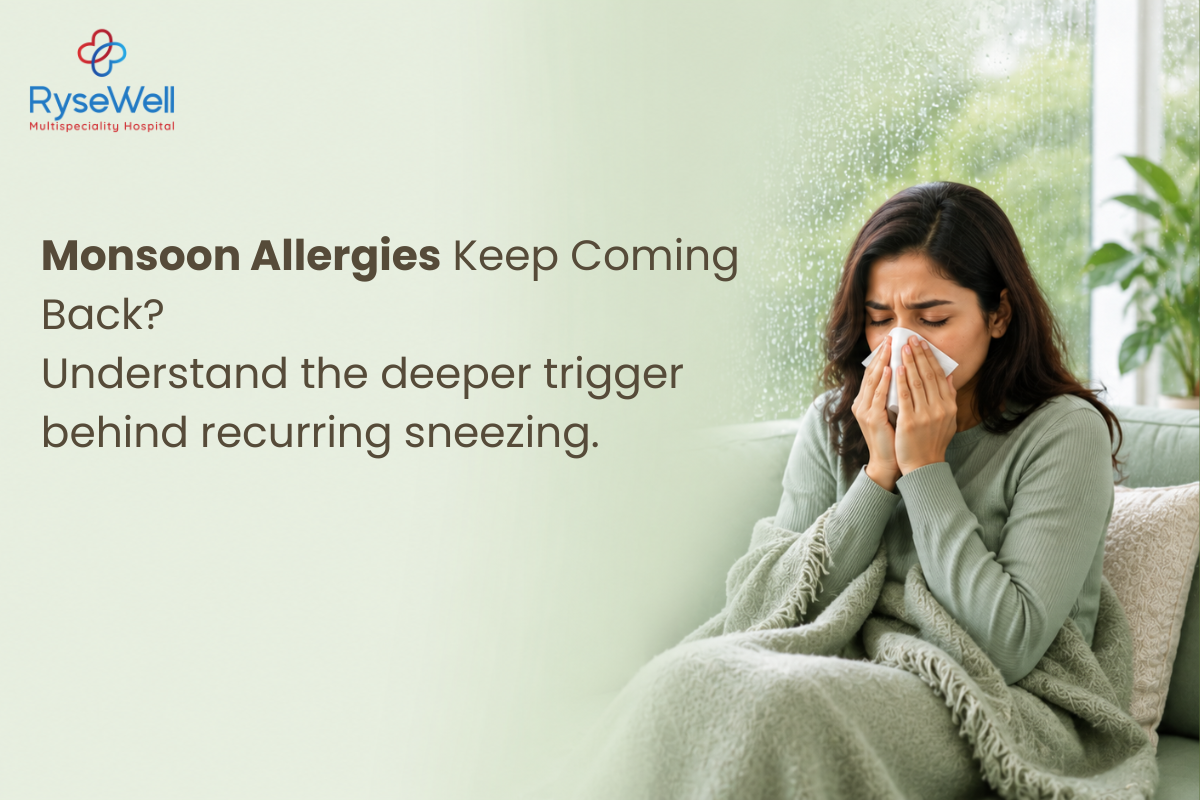
Monsoon Allergies and Recurring Sneezing: Can Homeopathy Support Long-Term Relief?
Repeated sneezing, blocked nose, and itchy eyes during the rainy season may be more than a passing cold. Homeopathy offers a personalized, gentle approach to understanding and managing recurring monsoon allergies.
Healthcare Awareness · RyseWell Homeopathy Team · 7 min read
Monsoon brings cooler weather, greenery, and relief from summer heat — but for many people in Pune, it also brings repeated sneezing, blocked nose, itchy eyes, throat irritation, and breathing discomfort. Increased humidity, damp walls, mold growth, dust mites, and sudden weather changes can all trigger monsoon allergies. At RyseWell Homeopathy, we focus on understanding the individual pattern behind recurring allergy flare-ups and supporting long-term balance in a gentle, personalized way.
What Are Monsoon Allergies?
Monsoon allergies occur when the immune system reacts strongly to allergens present during the rainy season. These triggers can irritate the nose, throat, eyes, and respiratory tract — leading to symptoms that keep returning throughout the season.
|
🍄
Mold & Fungus Growth
Damp walls, wet carpets, and humid indoor spaces encourage mold and fungus — common monsoon allergy triggers.
|
🪲
Dust Mites
Humidity causes dust mites to thrive in bedding, curtains, and carpets, increasing indoor allergen exposure significantly.
|
|
🌿
Pollen & Pollution
Moisture-carried pollen and pollution mixed with humidity can worsen respiratory sensitivity during the monsoon months.
|
🌡️
Weather Changes
Sudden temperature shifts between hot and cool weather stress the immune system and can trigger allergy flare-ups.
|
Common Symptoms of Monsoon Allergies
Monsoon allergies may look like a cold, but they often keep returning throughout the season. If these symptoms occur repeatedly during the rainy season, it may be allergic rhinitis rather than a simple cold.
| Repeated sneezing and runny or blocked nose |
| Itchy nose, throat, or watery eyes |
| Post-nasal drip and cough due to throat irritation |
| Head heaviness and fatigue |
| Worsening symptoms in damp rooms or during humid weather |
Why Do Some People Keep Getting Allergies Again and Again?
Recurring allergies usually happen because the body remains sensitive to certain triggers. This is why long-term relief needs more than symptom control — the underlying sensitivity must also be understood.
| ► Family history of allergies |
| ► Low immunity or poor sleep |
| ► Stress and indoor pollution |
| ► Repeated exposure to dampness or dust |
| ► Existing asthma or sinus issues |
RyseWell Homeopathy offers personalized allergy evaluation and gentle, long-term supportive care for adults and children in Pune.
Can Homeopathy Support Long-Term Relief from Allergies?
Homeopathy for allergies focuses on the person, not just the sneezing. The aim is to understand why the body reacts strongly to certain triggers. For recurring allergic rhinitis and seasonal allergies, it can be considered as supportive long-term care under professional guidance.
|
🧍 Individualized Treatment
Treatment is tailored to the type of symptoms, timing, weather sensitivity, sleep pattern, stress response, and past allergy history.
|
🌿 Gentle Long-Term Care
The goal is to reduce the frequency, intensity, and recurrence of allergy episodes over time through gentle, non-suppressive care.
|
|
🔍 Detailed Case-Taking
Consultation explores when sneezing starts, indoor vs outdoor triggers, nasal discharge type, sinus pressure, emotional stress, and sleep quality.
|
👨👩👧 For Adults & Children
Homeopathy is generally considered gentle and can be explored for both adults and children with recurring seasonal allergies under qualified guidance.
|
How Homeopathy Looks at Individual Allergy Patterns
Different people experience allergies differently, and homeopathy considers these differences important because remedy selection depends on the full symptom picture.
| Some people sneeze mostly in the morning; others at night |
| Some have watery discharge with itchy eyes; others get nasal blockage |
| Some develop sinus pressure with headache |
| Some get cough from post-nasal drip; others have mainly eye symptoms |
Lifestyle Tips to Reduce Monsoon Allergy Triggers
Along with homeopathic care, reducing allergen exposure is very important. Small steps taken consistently around the home can significantly reduce allergic flare-ups during monsoon.
|
🪟 Ventilate & Dry
Keep rooms dry and well-ventilated. Avoid damp carpets and curtains, and clean mold-prone areas regularly.
|
🛏️ Clean Bedding
Use clean pillow covers and bedsheets regularly. Dry clothes properly before storing to prevent mold and mite growth.
|
|
😷 Mask Up
Use a mask while cleaning dusty areas. Avoid strong room fresheners and perfumes that can irritate the respiratory tract.
|
🩺 Seek Evaluation
Avoid self-medicating repeatedly. Keep windows closed during heavy rain if damp air worsens your symptoms.
|
When Should You See a Doctor?
| ► Sneezing and nasal blockage lasting more than 1 to 2 weeks |
| ► Symptoms returning frequently each season |
| ► Wheezing or breathing difficulty |
| ► Persistent cough or sinus pain with fever |
| ► Sleep disturbed due to blocked nose |
| ► Allergy medicines needed too often without lasting relief |
Recurring allergies can affect sleep, concentration, energy, and overall quality of life. Early care helps prevent worsening.
Key Takeaways
| Monsoon allergies are triggered by mold, dust mites, humidity, and weather changes |
| Recurring symptoms may indicate allergic rhinitis rather than a simple cold |
| Homeopathy offers individualized, gentle support for long-term allergy management |
| Reducing allergen exposure at home supports better outcomes alongside treatment |
| Breathing difficulty, persistent cough, or fever warrant prompt medical evaluation |
Frequently Asked Questions
Homeopathy may support people with recurring monsoon allergies by addressing individual sensitivity patterns and reducing symptom recurrence over time under professional guidance.
Yes. Humidity, mold, dust mites, and damp indoor spaces are very common during monsoon and can commonly trigger or worsen allergic rhinitis in sensitive individuals.
Homeopathy does not promise an absolute cure. It may help manage allergic tendency and reduce the frequency or intensity of episodes when treatment is properly individualized by a qualified practitioner.
Homeopathy is generally considered gentle when prescribed by a qualified practitioner. Children should always be properly assessed before starting any treatment.
If allergies cause breathing difficulty, wheezing, persistent cough, fever, or sleep disturbance, medical evaluation is important and should not be delayed.
Monsoon allergies and recurring sneezing can affect daily comfort, sleep, work, and overall wellbeing. While temporary symptom relief may help during flare-ups, repeated allergies need a deeper understanding of triggers and body sensitivity.
Homeopathy for allergies offers a gentle, individualized approach that focuses on long-term balance rather than only short-term suppression.
If you or your child experiences recurring sneezing, blocked nose, or allergic rhinitis during monsoon, consult RyseWell Homeopathy for personalized evaluation and supportive care.
RyseWell Homeopathy provides personalized, patient-first allergy care for adults and children — helping you find long-term relief from recurring monsoon allergies.
Recent Blogs

 Health Tests Every Man Should Consider After 30
June 22, 2026
 Why So Many Men Feel Constantly Exhausted Today ?
June 18, 2026



 Monsoon Health Risks Most Families Ignore
June 8, 2026

No related posts found in this category.