
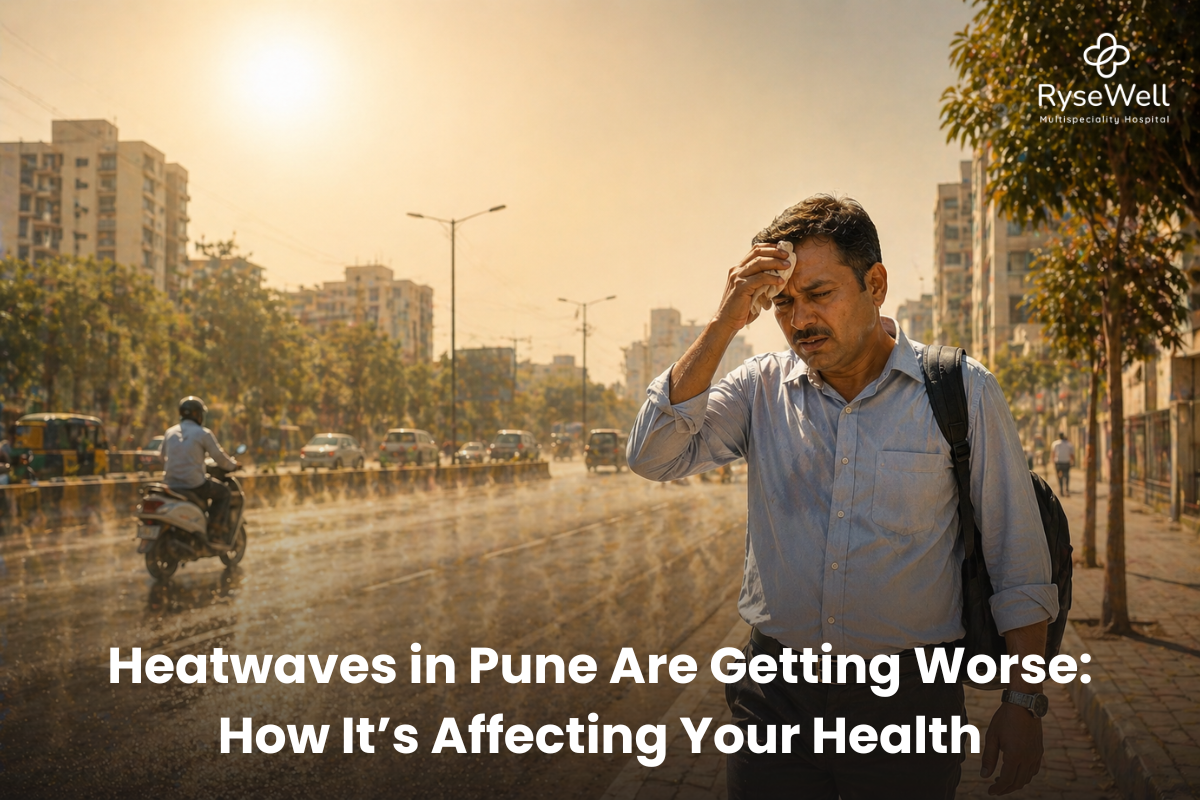
Heatwaves in Pune: Why Rising Temperatures Are Becoming a Serious Health Risk
What many dismiss as seasonal discomfort is increasingly becoming a clinically significant health concern.
Clinical Health Blog · Rysewell Hospitals Medical Team · 8 min read
In recent years, Pune has been experiencing longer, more intense heatwaves, with temperatures frequently crossing 40°C. What was once considered a short peak summer phase is now extending into prolonged periods of extreme heat. For many, this feels like seasonal discomfort. Clinically, however, it is becoming a serious and growing health concern.
What Is the Actual Issue?
Heatwaves are not just about high temperatures. The real concern lies in the combination of environmental stressors that create continuous strain on the body:
|
☀️
Prolonged Heat Exposure
Extended periods of high temperatures increase cumulative heat stress.
|
🌙
Warmer Nights
Reduced overnight cooling limits the body’s recovery time.
|
|
🏙️
Urban Heat Effect
Concrete structures trap heat and intensify local temperatures.
|
💧
Increased Humidity
Humidity reduces effective sweating and natural cooling.
|
Together, these factors create continuous physiological stress, not just temporary summer discomfort.
How Heatwaves Affect Your Health
1. Dehydration and Electrolyte Imbalance
Excessive sweating causes significant fluid loss and electrolyte depletion. Early symptoms often include fatigue, dizziness, weakness, and muscle cramps. If ignored, this can quickly progress to more serious heat-related complications.
2. Heat Exhaustion and Heatstroke
When the body fails to regulate internal temperature, core temperature begins to rise. Sweating becomes ineffective, and heat exhaustion can rapidly progress to heatstroke — a medical emergency that requires immediate intervention.
3. Cardiovascular Stress
Extreme heat places additional strain on the cardiovascular system. Heart rate rises, blood pressure becomes unstable, and individuals with pre-existing heart conditions face increased risk of complications.
4. Kidney Stress
Dehydration reduces blood flow to the kidneys, increasing the risk of kidney stones, poor filtration, and acute kidney injury. Summer often brings a noticeable rise in kidney-related complaints.
5. Mental and Cognitive Impact
Heat affects mental well-being as much as physical health. Common symptoms include irritability, poor concentration, mental fatigue, and disturbed sleep due to warmer nights.
6. Increased Risk of Infections
High temperatures support faster bacterial growth, increasing the likelihood of food poisoning, waterborne illnesses, and skin infections during prolonged summer periods.
Who Is Most at Risk?
Children
Outdoor workers
Diabetes patients
Heart disease patients
Kidney condition patients
These groups are more vulnerable to dehydration, poor thermoregulation, and heat-related complications, and should monitor symptoms closely during heatwaves.
Where Most People Go Wrong
| Ignoring early warning signs |
| Delaying hydration |
| Staying outdoors during peak heat hours |
| Sudden exposure to extreme temperature changes |
Timely medical care can prevent dehydration, heatstroke, and serious complications. Speak to a Rysewell specialist today.
How Rysewell Hospitals Can Help
At Rysewell, the clinical approach focuses on prevention, early diagnosis, and effective treatment of heat-related health complications.
|
🔍 Early Detection
Clinical evaluation helps identify dehydration, electrolyte imbalance, and early heat stress before complications escalate.
|
🏥 Medical Management
Timely intervention helps stabilize vital parameters, prevent complications, and support faster recovery.
|
|
❤️ Chronic Care Support
Patients with diabetes, heart disease, or kidney conditions receive closer monitoring and seasonal care adjustments.
|
💧 Preventive Guidance
Structured advice on hydration, diet, and safer daily routines helps reduce heat-related health risks.
|
What You Should Do During Heatwaves
| ► Stay hydrated consistently |
| ► Avoid outdoor exposure between 12 PM and 4 PM |
| ► Wear light, breathable clothing |
| ► Eat fresh, hygienic food |
| ► Monitor your health regularly |
Frequently Asked Questions
Early warning signs include fatigue, dizziness, headache, muscle cramps, excessive thirst, and reduced urine output. These symptoms often indicate dehydration or early heat stress and should not be ignored.
Heat exhaustion is an early stage where the body struggles to cool itself, often causing sweating, weakness, and dizziness. Heatstroke is a medical emergency where core body temperature rises dangerously and may cause confusion, vomiting, or collapse.
Heatwaves are lasting longer, nights are warmer, and urban environments trap more heat than before. This reduces the body’s recovery time and increases cumulative stress on multiple organ systems.
Elderly individuals, children, outdoor workers, and people with diabetes, heart disease, or kidney conditions are at significantly higher risk and should take extra precautions during hot weather.
Seek medical care immediately if symptoms progress to vomiting, confusion, severe weakness, fainting, or high body temperature. These may indicate heatstroke or serious dehydration requiring urgent treatment.
Heatwaves are no longer just seasonal discomfort. They are a significant health risk that requires awareness and proactive management.
Understanding your body’s response to heat and taking preventive steps can help you avoid serious complications.
Taking timely action today can help prevent serious health problems tomorrow.
Rysewell Hospitals offers expert support for dehydration, heat stress, seasonal illness, and chronic care during extreme summer conditions.
Recent Blogs


 Health Tests Every Man Should Consider After 30
June 22, 2026

 Why So Many Men Feel Constantly Exhausted Today ?
June 18, 2026



 Monsoon Health Risks Most Families Ignore
June 8, 2026

No related posts found in this category.