
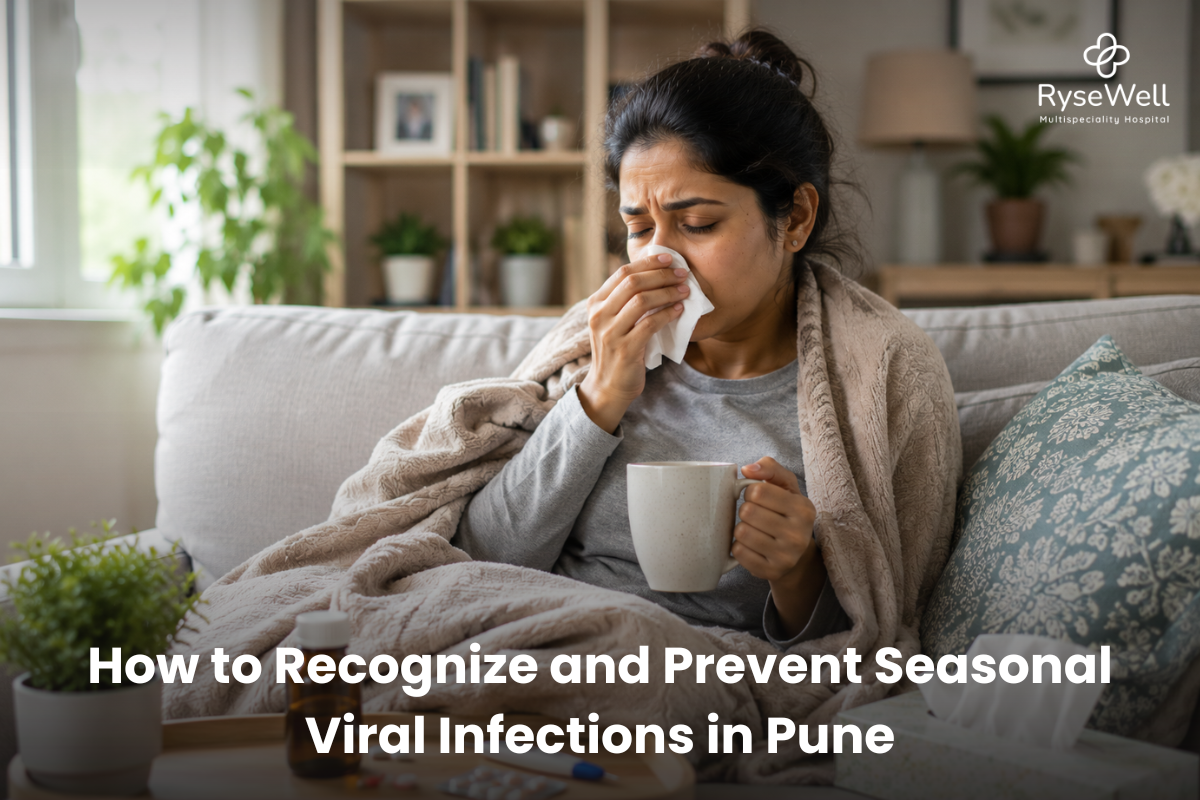
Seasonal Viral Infections in Pune: Why They Are Increasing and How to Protect Your Health
Changing weather conditions, pollution, and reduced immunity are contributing to a rise in seasonal viral infections across Pune.
Healthcare Awareness Blog · Rysewell Hospitals Medical Team · 9 min read
Seasonal viral infections are becoming increasingly common in urban cities like Pune, especially during weather transitions. While many infections appear mild initially, delaying proper care or ignoring symptoms can sometimes lead to complications — particularly in children, elderly individuals, and people with weaker immunity.
Why Seasonal Viral Infections Increase in Pune
Pune experiences noticeable climate shifts throughout the year, particularly during seasonal transitions. These environmental changes can weaken immunity and increase susceptibility to infections.
|
🌧️
Climate Transitions
Summer-to-monsoon shifts and sudden temperature fluctuations increase infection risk.
|
🏙️
Urban Exposure
Crowded environments, pollution, and dust exposure increase viral spread.
|
|
😴
Lifestyle Factors
Poor sleep, stress, and unhealthy eating habits can weaken immunity.
|
💧
Reduced Hydration
Inadequate hydration can affect recovery and immune response.
|
Common Seasonal Viral Infections
Seasonal viral illnesses often spread rapidly through airborne droplets, physical contact, and crowded public environments.
| Viral fever |
| Flu-like infections |
| Upper respiratory tract infections |
| Seasonal cold and cough |
| Throat infections |
Early Signs People Often Ignore
Many individuals continue daily activities while ignoring symptoms that may indicate the beginning of a viral infection.
| ► Mild fever |
| ► Fatigue or weakness |
| ► Sore throat |
| ► Sneezing and nasal congestion |
| ► Dry or persistent cough |
| ► Body pain and headache |
Early medical attention and proper care can help prevent complications and support faster recovery.
How to Prevent Seasonal Viral Infections
|
🧼 Hygiene
– Maintain regular hand hygiene
– Avoid touching your face frequently – Practice respiratory etiquette |
🥗 Immunity Support
– Eat balanced meals
– Stay hydrated consistently – Prioritize sleep and stress management |
|
😷 Exposure Management
– Avoid crowded places during outbreaks
– Use masks if symptomatic – Rest when early symptoms appear |
🏥 Medical Attention
– Seek evaluation for persistent symptoms
– Avoid excessive self-medication – Monitor fever and breathing difficulties |
How Rysewell Hospitals Can Help
At Rysewell Hospitals, the focus remains on early medical assessment, supportive treatment, preventive healthcare guidance, and coordinated multispecialty care for seasonal illnesses and viral infections.
Frequently Asked Questions
Weather transitions, humidity changes, pollution exposure, and weakened immunity during climate fluctuations can increase susceptibility to viral infections and help infections spread more rapidly.
Common symptoms include fever, fatigue, sore throat, cough, nasal congestion, headache, body pain, weakness, and reduced appetite.
You should seek medical evaluation if symptoms persist, fever becomes high, breathing difficulty develops, weakness becomes severe, or recovery is unusually delayed.
Yes. Viral infections spread easily through airborne droplets, physical contact, shared surfaces, and crowded indoor environments such as schools, offices, and public spaces.
Maintaining proper hygiene, staying hydrated, getting adequate sleep, eating nutritious food, managing stress, and avoiding unnecessary exposure during outbreaks can help reduce infection risk.
Seasonal viral infections are common, but they should not be ignored. Environmental changes, stress, poor immunity, and delayed care can increase the risk of complications and prolong recovery.
Recognizing symptoms early, maintaining preventive habits, and seeking timely medical guidance can help support faster recovery and better health outcomes.
Taking preventive steps today can help protect your health throughout changing seasons.
Rysewell Hospitals provides healthcare support, preventive guidance, and timely medical care for seasonal viral infections and related illnesses.
Recent Blogs
 Health Tests Every Man Should Consider After 30
June 22, 2026

 Why So Many Men Feel Constantly Exhausted Today ?
June 18, 2026



 Monsoon Health Risks Most Families Ignore
June 8, 2026

No related posts found in this category.