
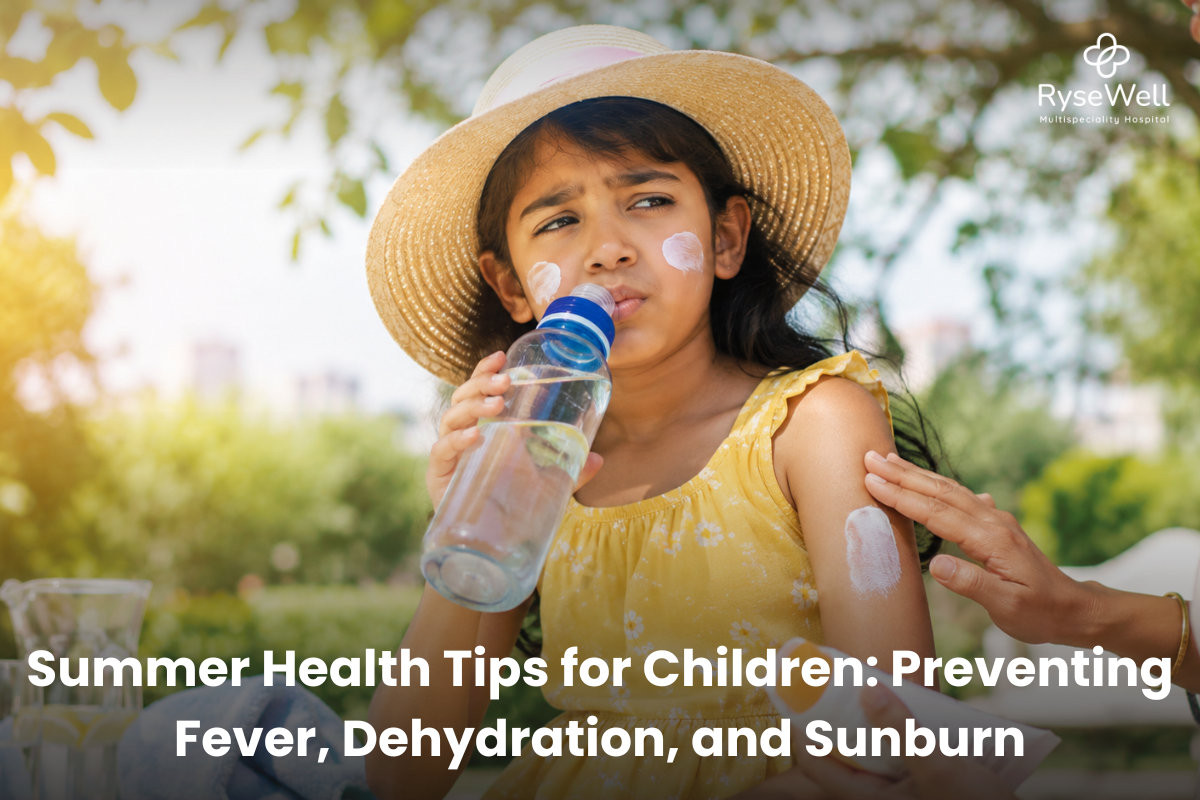
Summer Health Risks in Children: Common Problems Parents Should Not Ignore
Summer vacations are often associated with outdoor play, travel, swimming, and longer hours spent in the sun. While this season brings excitement for children, it also increases the risk of several health problems if proper precautions are not taken.
High temperatures, dehydration, excessive sun exposure, and seasonal infections can affect children more quickly than adults because their bodies are more sensitive to heat and fluid loss.
Many parents notice symptoms such as fever, tiredness, skin irritation, reduced appetite, or excessive sweating during peak summer months. While these issues may appear common, ignoring early signs can sometimes lead to more serious complications.
Why Children Are More Vulnerable During Summer
- The body loses more fluids through sweating
- Exposure to heat increases rapidly
- Appetite and hydration habits may change
- Immunity may become temporarily weaker
- Young children often cannot identify dehydration symptoms early
Common Summer Health Problems in Children
1. Dehydration
Dehydration is one of the most common summer-related concerns in children and occurs when the body loses more fluids than it receives.
- Dry lips and mouth
- Fatigue or low energy
- Reduced urination
- Dizziness
- Headache
- Excessive thirst
2. Fever and Viral Infections
- Viral fever
- Seasonal infections
- Throat infections
- Flu-like illnesses
3. Sunburn and Skin Irritation
- Redness
- Skin burning sensation
- Rashes
- Irritation and itching
4. Heat Exhaustion
- Weakness
- Excessive sweating
- Nausea
- Headache
- Muscle cramps
Summer Health Tips for Children
- Encourage frequent water intake and fresh fluids
- Avoid outdoor activity between 11 AM and 4 PM
- Use lightweight cotton clothing and caps
- Apply child-safe sunscreen before outdoor exposure
- Focus on light, nutritious, and hydrating meals
- Maintain proper hygiene and hand washing habits
- Ensure adequate sleep and rest
Early Warning Signs Parents Should Never Ignore
- Persistent high fever
- Continuous vomiting
- Extreme weakness
- Breathing difficulty
- Severe dehydration symptoms
- Excessive drowsiness
How Rysewell Hospitals Can Help
At Rysewell Hospitals, the focus is on timely pediatric care, preventive healthcare guidance, and seasonal wellness support for children.
- Assessment of dehydration and fever-related symptoms
- Support for heat-related illnesses
- Preventive healthcare guidance for parents
- Nutrition and hydration support
- Multispecialty pediatric healthcare assistance
Frequently Asked Questions
How can I prevent dehydration in children during summer?
Encourage frequent water intake, fresh fruits, homemade drinks, and avoid prolonged outdoor exposure during peak heat hours.
What are early signs of heat exhaustion in children?
Common signs include weakness, excessive sweating, nausea, headache, dizziness, and muscle cramps.
When should parents seek medical attention?
Parents should seek timely medical care if children experience persistent fever, breathing difficulty, vomiting, severe dehydration, or unusual drowsiness.
Why are children more vulnerable to heat-related illnesses?
Children lose fluids more quickly, spend more time outdoors, and may not recognize dehydration or heat exhaustion symptoms early.
Conclusion
Summer can be enjoyable and safe for children when proper precautions are taken. Simple preventive steps such as hydration, nutrition, sun protection, and timely care can significantly reduce the risk of seasonal health problems.
Parents should remain attentive to early symptoms and avoid ignoring signs of dehydration, fever, or heat exhaustion.
To learn more about pediatric healthcare and seasonal wellness support:
- Visit Rysewell Hospitals
- Call or WhatsApp: +91 7709862164
Recent Blogs


 Health Tests Every Man Should Consider After 30
June 22, 2026

 Why So Many Men Feel Constantly Exhausted Today ?
June 18, 2026



 Monsoon Health Risks Most Families Ignore
June 8, 2026

No related posts found in this category.